
This comparison explores how Rocket.new, Crayon, and Klue differ in competitive monitoring versus decision intelligence, helping teams choose the right tool for actionable insights and strategic decision-making.
What really matters after monitoring competitors?
Most teams think tools like Crayon or Klue win because they track competitors. That’s only half the story. The real difference begins after tracking ends. What you do with that data shapes your product, your workflow, and your growth. Many teams collect insights but struggle to turn them into action.
According to McKinsey & Company, companies that fully adopt AI can increase productivity by up to 40%, showing a clear shift toward faster and more data-driven workflows. That points to one simple truth. Action matters more than observation.
So the real question is simple. Are you just collecting insights, or actually building with them?
I'll help you understand how different platforms handle that “after” stage and how you can turn insights into real outcomes in this blog.
Where the real difference shows?
Most comparisons stop at monitoring. That’s where people miss the bigger picture.
When you look at Rocket.new vs Crayon vs Klu closely, the real difference shows up after the data is collected. Crayon and Klue are strong at tracking competitors. They gather competitive data, scan review sites, and support sales teams with regular updates. But the flow usually ends there.
Rocket.new takes a different route**. It focuses on what happens after insights. It helps users move from research to execution without switching between tools.**
What sets them apart
-
Crayon and Klue track competitors across websites, job boards, and review sites
-
They collect and organize competitive data into dashboards
-
They provide competitive insights for sales teams and product marketing
-
Rocket.new turns ideas into a full app directly
-
It helps users go from insight to execution in one platform
-
It uses an AI assistant to build using natural language
-
It supports both web app and mobile apps
So the difference is not about who tracks better. The real difference is what happens next. One side stops at insights, while the other helps you build something real from them.
What Crayon and Klue actually do?
Crayon and Klue are known as a competitive enablement platform. They focus on tracking, organizing, and sharing competitor updates. They help teams stay informed, but their role mostly ends at insights.
Key features of Crayon and Klue
-
Monitor competitor websites, job boards, and pricing changes
-
Collect competitive insights from multiple data sources
-
Support product marketing and sales teams
-
Answer competitive questions with structured data
-
Build dashboards using CRM data
These tools help decision makers stay informed and understand the market better. But they stop at insights. They don’t help you create a web app, build mobile apps, or turn insights into a working product..
Where the workflow slows down?
After using Crayon or Klue, the process doesn’t end. That’s where the real slowdown begins. Teams move from insights to execution, but the transition is not smooth.
How the workflow actually unfolds
-
Data collection: Teams gather competitive data and insights
-
Tool switching: Move across other tools to continue the process
-
Development start: Developers begin writing code from scratch
-
UI creation: Designers work separately on UI and layout
-
Workflow management: Product teams step in to manage the project
This back-and-forth creates friction. Teams switch between multiple tools, lose context, and repeat steps. That’s exactly where most projects slow down.
Rocket.new: turning insight into action
Instead of just collecting competitive insights, it helps you start building right away. It acts like an AI powered platform that connects thinking, planning, and execution.
How Rocket.new works?
Rocket.new uses an AI assistant that understands natural language. You describe your idea, and it starts building your app.
It combines:
-
AI app builders
-
code editor access
-
real-time UI generation
-
backend setup with database connections
You don’t need a heavy coding background. You can still create complex apps with control and clarity.
Rocket.new intelligence system explained
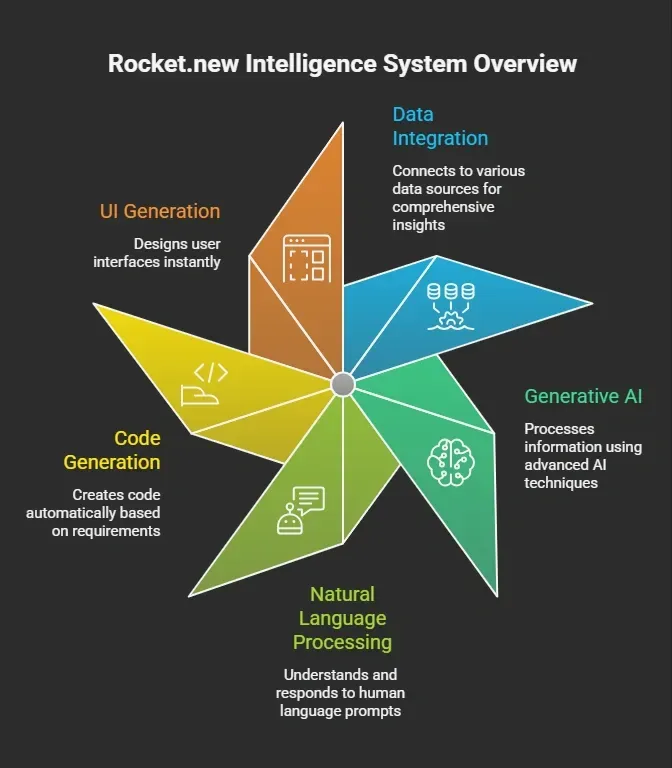
Rocket.new works through an intelligence layer that brings everything into one place. It connects thinking, planning, and execution so your project moves with clarity instead of scattered steps.
Core idea
At its core, Rocket.new combines:
-
Research
-
Strategy
-
Execution
This means your project is not just random code. Every part of your app is built with proper context.
What you get
-
Full app with frontend and backend
-
Source files with full code access
-
Version history for tracking changes
-
Control over layout and features
This is not just an AI tool. It works as a single platform where users can manage the entire workflow from idea to execution.
What makes Rocket.new different from other tools?
When you compare these platforms side by side, the difference becomes very clear. It’s not just about tracking competitors or collecting insights. It’s about what each platform actually helps you do after that stage.
| Feature | Rocket.new | Crayon | Klue |
|---|---|---|---|
| Competitor tracking | Yes | Yes | Yes |
| Competitive enablement | Yes | Yes | Yes |
| Build web app | Yes | No | No |
| Build mobile apps | Yes | No | No |
| AI assistant | Yes | Limited | Limited |
| Code access | Yes | No | No |
| Workflow execution | Full | Partial | Partial |
| Real product creation | Yes | No | No |
The point is simple. Crayon and Klue stop at insight. Rocket.new takes it further and helps you build something real from those insights.
Vibe coding and why it matters
Now let’s talk about vibe coding. This is where the shift really happens. Instead of long setup and scattered tools, vibe coding focuses on building apps quickly using simple inputs and fast feedback.
What vibe coding actually means
Vibe coding is about:
-
Building apps using natural language
-
Making fast iterations without heavy setup
-
Getting real-time feedback while building
-
Avoiding complex tools and long processes
How Rocket.new uses vibe coding
-
You describe your idea in simple terms
-
The AI assistant generates code instantly
-
You adjust the UI and layout as needed
-
You test the app with real users
-
You keep refining until the app is ready
Crayon and Klue don’t support this approach. They help you understand competitors, but they don’t help you build your response. Rocket.new focuses on turning that understanding into a working app.
Building mobile apps and web apps with ease
Rocket.new puts a strong focus on building both mobile apps and web app experiences in a simple, direct way. It removes long setup steps and helps teams move from idea to execution faster.
What you can build
-
Native mobile apps: Create smooth and responsive mobile experiences
-
Internal tools: Build tools for teams to manage workflows and data
-
Full app products: Launch complete app experiences with backend and frontend
-
Database connections: Connect and manage data easily within the app
-
Custom UI and layout: Adjust design and structure based on your needs
This approach works well for small teams. Instead of depending on developers for every step, you can start building directly. At the same time, developers still play a role. They can refine code, adjust frontend logic, and improve overall performance.
Set up and control in Rocket.new
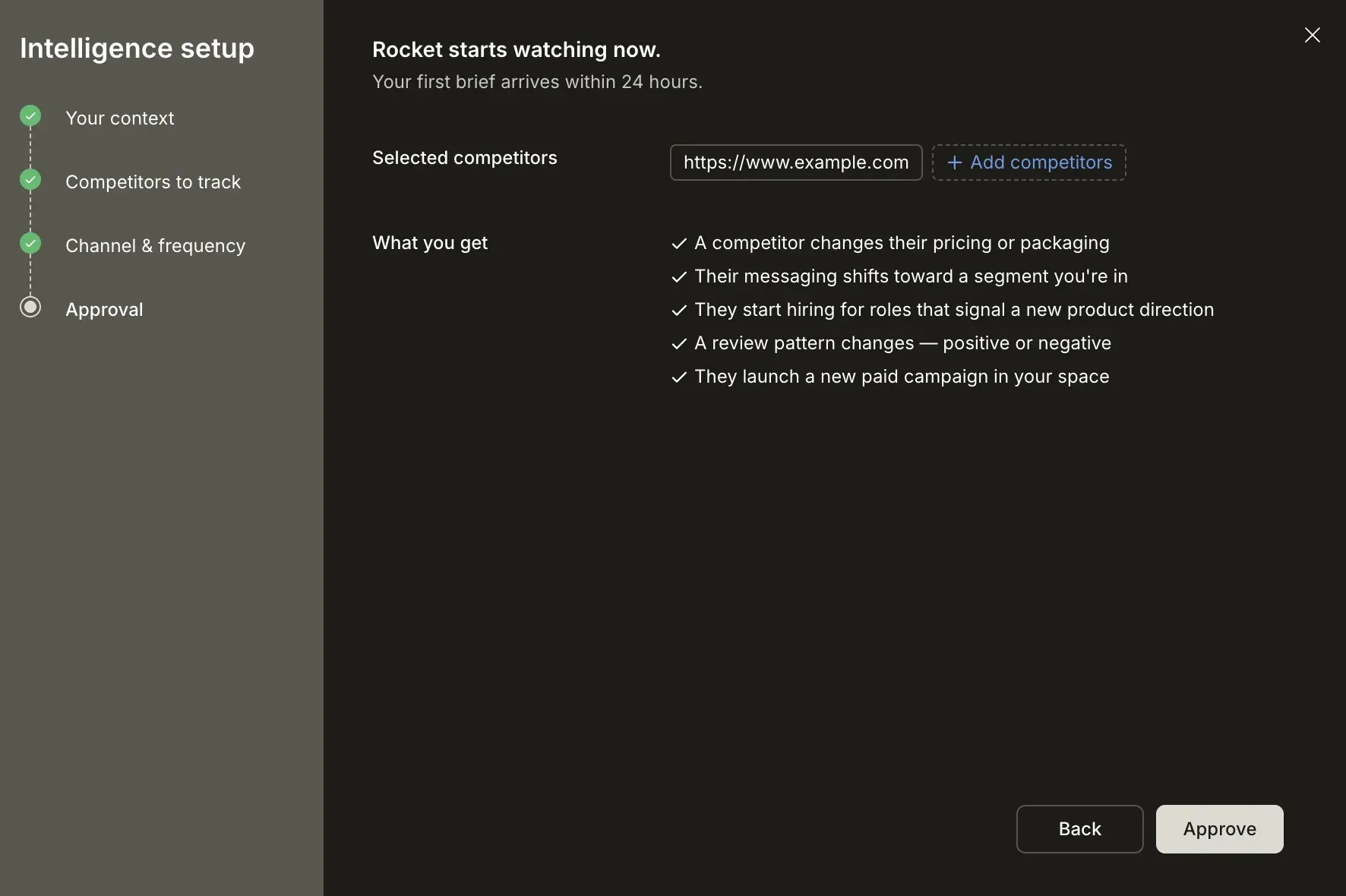
Setup is simple and direct. You open the platform, describe your project, and the AI assistant handles most of the heavy lifting. The process feels smooth because everything stays in one place, without jumping across tools.
How setup and control work together
-
Start building: Begin with a simple idea and basic direction
-
Define features: Use natural language to describe what you want
-
Generate instantly: Get UI and code created in real time
-
Connect systems: Link database and workflow within the same platform
-
Test and refine: Improve the app step by step as you go
-
Full access: Work with source files and make changes when needed
-
Edit freely: Use the code editor to adjust logic and structure
-
Adjust UI: Make real-time updates to layout and design
This balance between automation and control keeps the process smooth. You move fast with AI, while still having the flexibility to shape the final product your way.
Insight from real users
Here’s a strong take from a LinkedIn discussion around AI app builders and real product building:
“Startups need AI applications, not just AI-built websites… applications that actually work in production.” Linkedin
That line hits the exact point of this blog. Tracking insights or generating something basic is not enough. What matters is building something that works in real use. That’s the gap Rocket.new focuses on filling.
Pricing and accessibility
Crayon and Klue follow a typical pricing model. Enterprise focused. Custom plans. High cost for advanced features.
-
Free plan available
-
Scales with usage
-
Suitable for small teams and individual users
This makes it easier to start building without heavy investment.
Real use cases
Let’s keep it practical and clear. The difference shows up in how each platform is used in real scenarios.
How teams use each platform
-
Crayon or Klue: Track competitor changes, support product marketing, and answer competitive questions
-
Rocket.new: Build mobile apps from insights, create internal tools, launch a full app, and test ideas with real users
The difference is simple. One informs. The other executes.
Why this shift matters for developers and teams
Developers don’t disappear. Their role changes.
How roles evolve
-
Improve: Refine generated code
-
Optimize: Work on performance and scalability
-
Customize: Add specific logic where needed
This saves time. Teams move faster, stay in context, and keep the workflow smooth.
Connecting Rocket.new to reality
“The difference is not the monitoring. It is what happens after.” This line captures the core idea clearly. Tracking competitors is useful, but it’s only the starting point.
Crayon and Klue handle monitoring well and help teams stay informed. They organize insights and support decision making, but the process often pauses there.
Rocket.new moves forward from that point. It answers the next step. What do you build next, and how fast can you turn that into a working app?
Turning insights into real execution
Most teams still depend on separate tools for each step.
One handles research, another manages planning, and another is used to build the app. This breaks the workflow and slows down progress. Context gets lost, and teams spend more time switching between tools than actually building something useful.
Rocket.new solves this by bringing everything into one platform. It connects data, context, and execution so users can move from idea to a full app without friction. Rocket.new vs Crayon vs Klu is not just about monitoring competitors. It is about what you build after that. Teams that act faster and build directly from insights stay ahead.
If you want to move beyond tracking and start building real outcomes, Rocket.new is worth trying.
Table of contents
- -Where the real difference shows?
- -What sets them apart
- -What Crayon and Klue actually do?
- -Key features of Crayon and Klue
- -Where the workflow slows down?
- -How the workflow actually unfolds
- -Rocket.new: turning insight into action
- -How Rocket.new works?
- -Rocket.new intelligence system explained
- -Core idea
- -What you get
- -What makes Rocket.new different from other tools?
- -Vibe coding and why it matters
- -What vibe coding actually means
- -How Rocket.new uses vibe coding
- -Building mobile apps and web apps with ease
- -What you can build
- -Set up and control in Rocket.new
- -How setup and control work together
- -Insight from real users
- -Pricing and accessibility
- -Real use cases
- -How teams use each platform
- -Why this shift matters for developers and teams
- -How roles evolve
- -Connecting Rocket.new to reality
- -Turning insights into real execution