
Rocket.new leverages compounding competitive intelligence to continuously refine insights, strengthen strategic decisions, and build a durable edge as data accumulates and market understanding deepens over time.
Why does competitive intelligence reset every quarter, and can it compound instead?
Yes, it can.
When systems are built to learn continuously, intelligence grows over time instead of restarting from zero each quarter. The real issue is not a lack of data. It’s how that data is handled. Most teams deal with scattered information across tools, updates, and conversations. Over time, context gets lost, and insights fade away.
That gap is where smarter systems step in. Instead of losing signals, patterns, and competitor moves, they retain and connect them. This helps teams stay aligned and move faster every day without repeating the same work.
This blog will show how to shift from resetting intelligence to building a system that compounds over time.
The Problem Most Teams Face With Quarterly Resets
Most teams don’t struggle with effort. They struggle with continuity. Work gets done, insights get shared, but very little carries forward in a meaningful way.
What typically happens:
-
A new quarter starts, and teams begin collecting data again
-
Reports get built and shared across the workspace
-
Competitors launch features or make a pricing change
-
Signals get noticed for a short time, then buried under new updates
-
Customer feedback and insights stay scattered across tools
-
People forget past context and repeat the same research
-
The next quarter feels like starting from zero again
This creates a loop. Teams gather information, then miss it later. Progress slows down, even though the effort stays high.
That is the core problem. Intelligence should not reset like a game level. It should build over time and carry context forward.
Why Traditional Competitive Intelligence Feels Slow?
The issue is not effort. It’s the way competitive intelligence is handled. The process looks organized, but it does not keep up with how fast things change.
What slows things down:
-
Competitive intelligence is treated like a static report
-
Data is structured once but not updated continuously
-
Teams collect competitor moves and track pricing manually
-
Insights get written as summaries instead of live signals
-
Information is shared in a workspace but not actively used
-
Customer feedback stays scattered across tools
-
Manual tracking creates extra load for teams
-
Small shifts from competitors often get missed
-
Competitors are fast moving and change every day
-
Pricing change, feature launches, and campaigns happen constantly
-
Signals appear quickly and disappear just as fast
-
Teams miss these updates without real time tracking
That is where the gap grows. Intelligence becomes outdated, and teams fall behind without even realizing it.
What Changes When Intelligence Compounds?
Now think about a system where intelligence compounds instead of resetting.
Each signal gets stored. Each competitor move adds context. Each pricing change connects to past patterns. Over time, the system builds shared context.
That is the shift.
Instead of guessing, teams rely on accumulated intelligence. Instead of starting fresh each quarter, they build on what already exists.
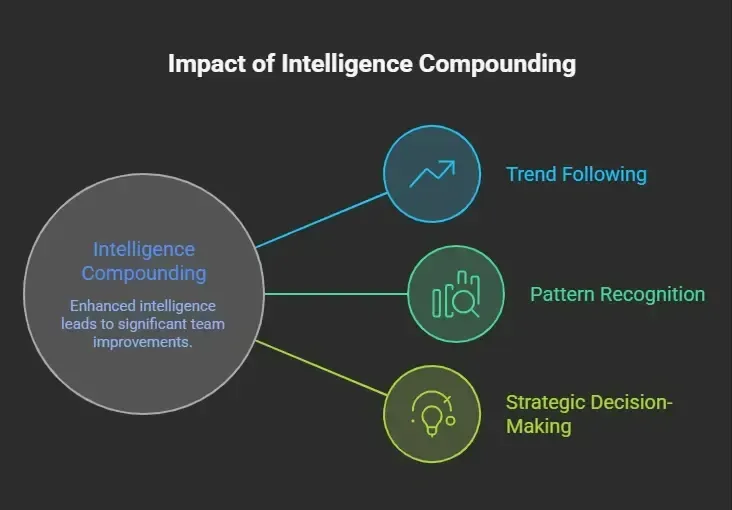
The game changes from reactive to continuous.
How Rocket.new Intelligence Works?
Rocket.new intelligence is built around this idea. Intelligence should grow, not reset.
The platform watches competitors, tracks signals, and turns scattered information into structured insights. It acts like a memory layer for teams.
Here is how it works in simple terms:
Step 1: Signal Collection
Rocket.new connects to multiple sources. It watches competitor moves, product updates, pricing shifts, and customer feedback. These signals get captured in real time.
Step 2: Context Building
Instead of storing raw data, the system builds shared context. It connects past and present signals. Teams do not lose information after a quarter ends.
Step 3: Insight Surface
The platform surfaces what matters. Alerts highlight competitor changes, pricing change patterns, and messaging shifts.
Step 4: Action Layer
Teams use insights to solve problems, build strategies, and refine competitive positioning.
Rocket.new connects research, Solve, Build and Intelligence into one platform. That makes it easier for teams to follow insights and act faster.
Key Features
-
Real time tracking of competitor moves
-
Alerts for pricing change and feature updates
-
Shared workspace for teams
-
Structured intelligence storage
-
Signal-based tracking instead of static reports
-
Supports flutter for product workflows
-
Built-in context for background for the call
These features reduce guessing. Teams do not have to manually track everything.
A Quick Comparison
It helps to look at the difference side by side. When you compare traditional workflows with a continuous system, the gap becomes clear.
| Approach | Traditional Intelligence | Rocket.new Intelligence |
|---|---|---|
| Data Handling | Scattered | Structured |
| Updates | Quarterly | Real time |
| Context | Lost over time | Builds continuously |
| Signals | Often missed | Captured and tracked |
| Decision Speed | Slow | Fast moving |
| Team Collaboration | Limited | Shared workspace |
This shift is not just about tools. It’s about how intelligence is treated. One approach resets and repeats. The other builds and carries context forward, making it easier for teams to stay aligned and act faster.
Why Most Businesses Struggle to Keep Up?
The issue is not data. Most businesses already have enough. The problem is how that data gets handled across teams.
What holds teams back:
-
Outdated workflows that cannot keep up with fast moving changes
-
Manual tracking of competitors across multiple sources
-
Customer feedback stuck in silos instead of shared context
-
Important signals getting missed in daily updates
-
Too much scattered information across tools
-
Limited visibility into competitor moves and pricing shifts
-
Lack of structured intelligence that teams can follow easily
This leads to guessing, which affects decisions over time. Without a system that connects and builds intelligence, most businesses struggle to keep up.
Community Insight
Here’s a perspective from LinkedIn that aligns closely with this shift:
“If you're not activating your insights, you’re just watching the game from the sidelines.” LinkedIn
This highlights a deeper issue. Many teams collect competitive intelligence but fail to carry it forward or use it consistently. Insights stay static, context gets lost, and the same research gets repeated every quarter.
Why Most Businesses Struggle to Keep Up?
The issue is not data. Most businesses already have enough. The problem is how that data gets handled across teams.
What holds teams back:
-
Outdated workflows: Cannot keep up with fast moving changes
-
Manual tracking: Competitors are tracked across multiple scattered sources
-
Customer feedback silos: Insights are not shared across teams
-
Missed signals: Important updates get lost in daily noise
-
Scattered information: Data lives across too many tools
-
Limited visibility: Competitor moves and pricing shifts are not clear
-
Lack of structure: Intelligence is not organized for easy follow
This leads to guessing, which affects decisions over time, Without a system that connects and builds intelligence, most businesses struggle to keep up.
The Role of Vibe Solutioning Platform
Rocket.new is positioned as the world’s first vibe solutioning platform. It goes beyond tracking data and focuses on helping teams solve real problems using intelligence.
What this approach changes:
-
Problem solving focus: Moves from just tracking data to actually solving use cases
-
Connected signals: Brings signals, context, and action into one flow
-
Strategy building: Helps teams build directly from insights, not guesswork
-
Tool consolidation: Replaces scattered tools used for competitors, customer feedback, and analysis
-
One platform approach: Keeps everything in a single workspace for clarity
-
Reduced load: Cuts down manual effort and repeated work
-
Easy workflows: Makes it simple for teams to follow insights and act quickly
This shifts the way teams work, from fragmented tracking to connected intelligence. When everything lives in one platform, teams stop switching tools and start building with clarity.
Real Use Cases
This is where things become practical. Different teams use intelligence in different ways, but the goal stays the same. Stay updated, follow signals, and act with clarity.
Here are a few use cases:
-
Sales team preparing for competitor calls
-
Product teams tracking feature shifts
-
Marketing teams analyzing competitor messaging
-
Businesses monitoring pricing changes
In each case, intelligence builds over time. Teams do not miss signals.
Competitive Intelligence on Rocket.new
Most teams rely on slow, scattered processes where intelligence gets lost every quarter. Competitors move fast, and teams miss key signals, which leads to guessing and delayed responses. The real problem is not effort, but the lack of a system that keeps context alive and builds on past insights.
Rocket.new intelligence changes this by connecting signals, competitor moves, and pricing changes over time. It builds shared context that grows every day. As a result, teams follow patterns, make better strategic decisions, and move with clarity instead of resetting each quarter.
If you want your intelligence to compound instead of reset, Rocket.new is worth checking out for building a continuous system that actually keeps up.
Table of contents
- -The Problem Most Teams Face With Quarterly Resets
- -Why Traditional Competitive Intelligence Feels Slow?
- -What Changes When Intelligence Compounds?
- -How Rocket.new Intelligence Works?
- -Step 1: Signal Collection
- -Step 2: Context Building
- -Step 3: Insight Surface
- -Step 4: Action Layer
- -Key Features
- -A Quick Comparison
- -Why Most Businesses Struggle to Keep Up?
- -Community Insight
- -Why Most Businesses Struggle to Keep Up?
- -The Role of Vibe Solutioning Platform
- -Real Use Cases
- -Competitive Intelligence on Rocket.new