
What factors influence the cost of developing an app? Complexity, features, platforms, and the development team’s expertise all play a key role in determining the final investment required.
Trying to figure out how much it costs to develop an app?
It’s a question that pops up every time someone has an idea for a mobile experience, a business tool, or a startup product.
In simple terms, the app development cost can range from a few thousand dollars to hundreds of thousands, depending on features, platforms, complexity, and who builds it.
Studies show that average development costs can sit anywhere from $20,000 to $300,000 or more for typical projects, with big players spending far above that.
So, why does the number fluctuate so wildly? Well, it’s not magic; it all comes down to app complexity, features, platforms, and the development process.
What Affects App Development Costs?
Before talking numbers, it’s good to understand what drives app costs.
App Complexity:
App complexity is basically a fancy way of saying “how much work will this app need?”
- Simple App: Minimal screens, basic functionality, and little to no backend. Think checklists, calculators, or a basic chat app. These are cheap because they’re easy to build.
- Moderately Complex App: Includes login systems, payments, push notifications,and some database integration. Examples: small eCommerce apps, fitness trackers, and local service apps. Development is moderate in time and cost.
- Complex Apps: Features such as AI, multimedia streaming, geolocation, real-time updates, and social networking make apps complex. Examples: Uber, TikTok, or large marketplace apps. These are pricey, often exceeding six figures.
Pro Tip: Even small additions like a chat feature or push notifications can turn a simple app into one of moderate complexity. It’s sneaky but true.
Platforms: iOS, Android, or Both?
Building for iOS and Android apps almost doubles the work if you do native apps (coding separately for each platform). Cross-platform development can save time and reduce costs, but it may limit certain advanced features.
- Native apps: Better performance, higher cost.
- Cross-platform apps: Lower cost, faster development, but some compromises on features.
So, if you’re debating which route to take, think about your users first. Go native for top-notch performance and polished experience, or choose cross-platform if speed and budget matter more. Either way, knowing the trade-offs upfront saves surprises later.
Features and Functionalities
The app functionality drives costs more than design sometimes.
Some examples:
- Basic Features – User login, static content, simple database.
- Advanced Features – Payment gateways, geolocation, real-time chat, and AI recommendations.
- Extra Bits – Push notifications, in-app purchases, third-party integrations.
Each feature adds hours of development, testing, and maintenance.
Team Choice and Location
Choosing who builds your app can make or break your project — and your budget. The right team affects speed, quality, and the smoothness of your app development process.
- Freelancers: Usually cheaper, flexible, but results can be unpredictable.
- In-house Development Team: Full control and consistent quality, but salaries and overhead make it expensive.
- App Development Company: Professional workflow, reliable delivery, and post-launch support, but comes with a higher app development cost.
Hourly rates vary by region:
- US/Canada: $100–$250/hour
- Europe: $50–$150/hour
- India/Southeast Asia: $20–$80/hour
Even if you go for the cheapest option, hidden costs like project management, communication delays, and bug fixes can sneak in and inflate the budget.
Picking the right team is a balance between cost, quality, and reliability. Going cheap may save money upfront, but investing in the right team upfront often pays off in smoother development and fewer headaches later.
The Mobile App Development Process Explained
Understanding the mobile app development process not only helps plan your budget but also sets expectations for timelines, effort, and potential challenges.
Breaking it down makes costs less mysterious and helps prevent nasty surprises.
Stage 1: Discovery & Planning
This is when goals, target audience, and features are finalized. Doing market research here saves money later.
Example: If your audience mostly uses Android, focusing first on that platform avoids spending twice as much on a small iOS user base.
Stage 2: Mobile App Design
The user interface (UI) and user experience (UX) are shaped here. Design affects retention. Unattractive or confusing apps don’t last.
- Typical cost: 10–20% of total app development cost.
- Deliverables: Wireframes, mockups, clickable prototypes.
Stage 3: Development & Coding
The biggest chunk of the budget happens here. Frontend, backend, API integrations, and logic all merge. The mobile app development team will translate the design into functioning code.
- Native vs. crossplatform affects hours.
- Simple apps: few hundred development hours.
- Complex apps: 1000+ hours.
Stage 4: QA & Testing
Testing finds bugs, ensures stability, and confirms that features work on various devices. Skipping QA is like baking a cake without tasting it.
- Cost: roughly 10–15% of development costs.
- Testing types: functional, performance, security, compatibility.
Stage 5: Deployment & Launch
Publishing on the app store:
- Apple App Store: $99/year
- Google Play Store: $25 one-time
A small cost compared to the development, but still necessary.
Stage 6: App Maintenance
Apps need love after launch: updates, bug fixes, security patches, and feature improvements.
- Maintenance: 15–20% of the original development cost annually.
- Without maintenance, even a great app dies after OS updates.
Following the full development process carefully helps control costs, ensures quality, and keeps users happy.
Skipping stages might save time upfront, but it usually ends in more expensive fixes later, kind of like trying to patch a leaky roof with tape instead of shingles.
App Cost Breakdown by Type
Here’s a snapshot of typical mobile app development cost ranges:
| App Type | Estimated Cost | Notes |
|---|---|---|
| Simple App | $20,000 – $50,000 | Basic functionality, minimal backend |
| Moderately Complex App | $50,000 – $100,000 | Auth, payments, push notifications |
| Complex App | $100,000 – $300,000+ | AI, real-time updates, geolocation |
Quick Tip: Keep your MVP (minimum viable product) lean to test your idea before going all-in.
Community Insight: Real Developers on Cost
A Reddit developer thread shared this insight:
“How much it typically costs to develop a mobile app varies widely based on scope, features, and chosen platform..”
How Rocket.new Helps Cut Initial Costs
Rocket.new is a vibe solutioning platform that can dramatically reduce the upfront cost of your app development journey.
Rather than hiring a full team or spending months coding from scratch, you can start with your idea and let Rocket.new generate real app code for you.
Top Features
- One‑Prompt Full App Generation: Describe your app once in natural language and get a working application with UI + backend.
- Backend Automation: Database schemas, authentication, and cloud setup are done for you.
- Design to Code (Figma Import): Paste a Figma link and Rocket.new turns it into real code.
- Live Previews & Editing: See your app in action as Rocket builds it and adjust content instantly.
- Template Library: Jumpstart builds with ready‑made templates for mobile apps, landing pages, dashboards, and more.
- Custom Domain & Deployment Support: Launch your app with a custom domain or direct Netlify deployment.
These features help speed up app development, reduce back‑and‑forth with developers, and give you something tangible to test or show early on.
By using Rocket.new early, you can reduce your initial development cost, speed up testing, and get a working product without waiting months or spending heavily on traditional development teams.
Practical Tips to Reduce App Development Cost
Saving money on app development doesn’t mean cutting corners. It’s about smart planning, focusing on what matters, and avoiding unnecessary work.
A few strategic decisions early can drastically reduce your app development budget without hurting quality.
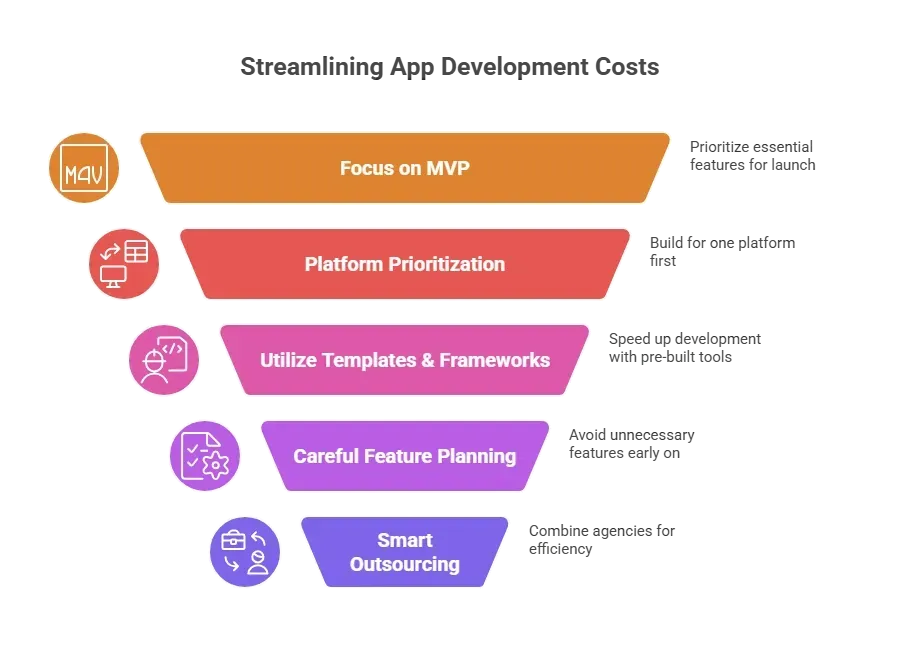
Think of it as trimming the fat, not cutting the steak. Focus on what users really need, plan your workflow wisely, and pick the right people for the job, and suddenly your app costs look a lot friendlier.
How Much Does It Cost to Develop an App?
Figuring out how much it costs to develop an app comes down to planning, complexity, and the team you choose. Simple apps start around $20,000, while complex enterprise apps can hit six figures. Hidden costs like app store fees, maintenance, and third-party integrations can add up. Tools like Rocket.new and an MVP approach can help keep your app development budget in check.
Even after launch, costs continue. Updates, bug fixes, and user tweaks are ongoing. Planning for maintenance and scalability ensures your app stays functional, competitive, and valuable without breaking the bank.
Table of contents
- -What Affects App Development Costs?
- -App Complexity:
- -Platforms: iOS, Android, or Both?
- -Features and Functionalities
- -Team Choice and Location
- -The Mobile App Development Process Explained
- -Stage 1: Discovery & Planning
- -Stage 2: Mobile App Design
- -Stage 3: Development & Coding
- -Stage 4: QA & Testing
- -Stage 5: Deployment & Launch
- -Stage 6: App Maintenance
- -App Cost Breakdown by Type
- -Community Insight: Real Developers on Cost
- -How Rocket.new Helps Cut Initial Costs
- -Top Features
- -Practical Tips to Reduce App Development Cost
- -How Much Does It Cost to Develop an App?