
Buyer intent data shows which B2B accounts are actively researching before they contact you. Combining first-party and third-party signals gives sales teams a real edge - Rocket Intelligence surfaces those in-market accounts automatically.
What is buyer intent data, and why do so few sales teams use it well?
Most B2B buyers are already deep into their research before they ever speak to a rep. They are comparing vendors, reading case studies, and visiting pricing pages - all while staying completely anonymous to your team. Research from HubSpot shows buyers spend the equivalent of a full workweek on a single purchase decision, across dozens of sites.
Intent data tracks those behavioral signals at the account level. When you know which accounts are actively researching your category right now, you can reach them before your competitors do - not after they have already made up their minds.
What Does Intent Data Actually Tell You?
Understanding what intent data surfaces is what separates teams that use it well from those that treat it like a basic contact list. It goes far beyond knowing who visited your site.
-
What topics they are researching: Topic clusters reveal the pain points a B2B buyer is actively wrestling with, giving you context on where they sit in their decision process.
-
How intensely they are researching: Intent data measures current activity against a historical baseline. A sharp spike in research intensity is a much stronger buyer intent signal than steady background browsing.
-
What kind of buyer behavior they are displaying: Repeat pricing page visits, review site comparisons, and competitor lookups in quick succession show very different buying intent from a single anonymous page view.
| Signal Category | Where It Comes From | What It Indicates |
|---|---|---|
| First-party | Your website, CRM, and email engagement | Direct interest in your brand |
| Second-party | Review sites, partner platforms | Active evaluation and comparison |
| Third-party | Publisher co-ops, digital properties | Topic research before vendor selection |
Think of buyer intent as a converging pattern, not a single data point. The more buying signals that align on the same account in a short window, the stronger the case for reaching out now.
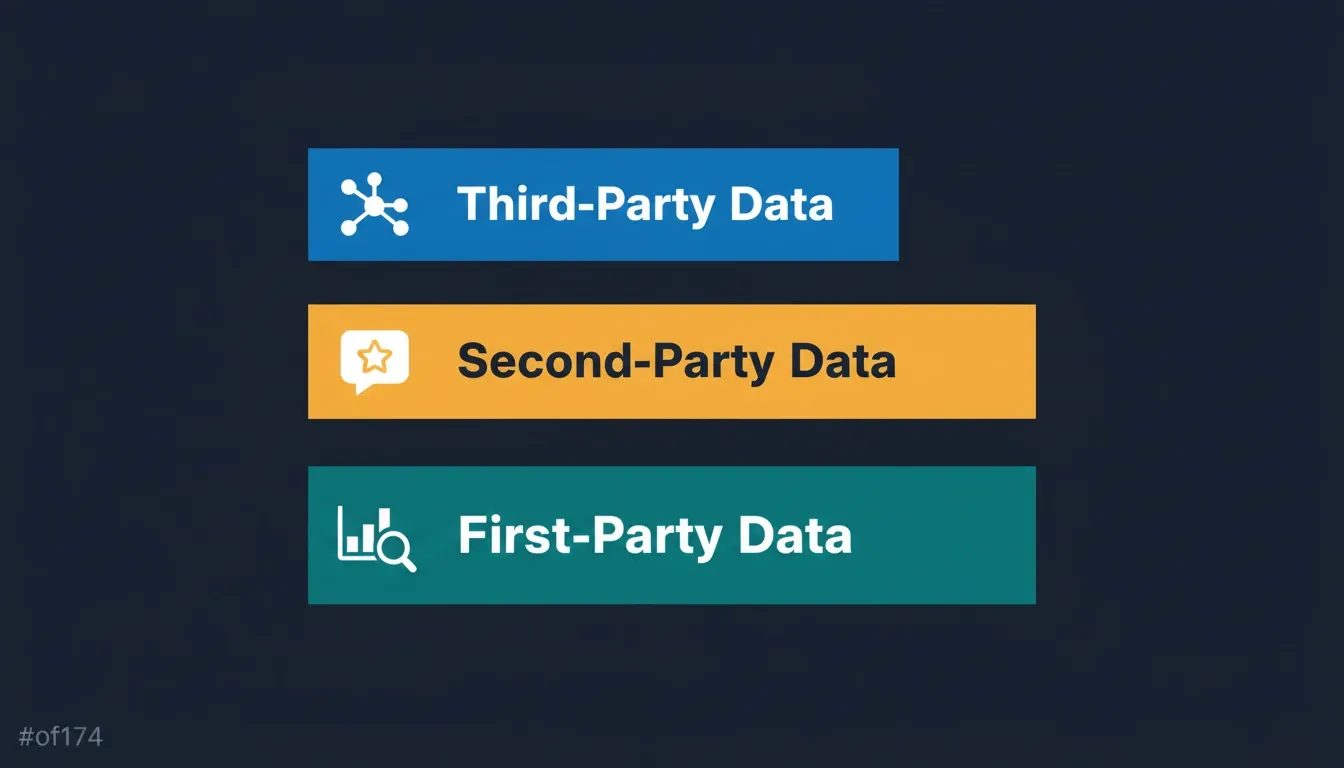
The three tiers of buyer intent data, each layer reveals a different stage of the buyer's research journey.
Signal Types and Sources
Buyer intent signals come from three distinct data tiers, each telling you something different. Knowing the source shapes how much weight you put on any given signal.
-
First-party intent data: tracks activity on your own website, CRM, and email channels - giving you precise, directly attributable buyer intent signals.
-
Third-party intent data: aggregates buyer behavior across thousands of B2B publisher sites - giving you visibility long before accounts reach your own site.
-
Second-party intent data: comes from platform partners like LinkedIn and G2 - capturing buyer intent during the active evaluation phase between the other two tiers.
First-Party Intent Data: Signals from Your Own Site
First-party intent data is everything you collect from your own digital properties. It is the most accurate layer, but it only shows you buyer intent activity already directed at you.
-
Website visitor data, CRM records, and email engagement form the core of any first-party intent data setup.
-
Repeat visits to pricing or demo pages, content downloads, and form interactions all produce strong buyer intent signals with clear attribution.
-
Visitor identification tools extend first-party coverage through reverse IP tracking, converting anonymous website visitors into named accounts.
The limitation is fundamental: any B2B buyer researching competitors or reading industry publications before finding you is invisible here. Third-party intent data is what fills that gap.
Third-Party Intent Data and Data Providers
Third-party intent data gives you visibility into buyer behavior that happens long before an account reaches your site. Intent data providers aggregate these signals across vast networks of B2B digital properties.
-
Behavioral signals from search engine queries, content downloads, social media activity, and page visits are collected across thousands of publisher sites and surfaced at the account level.
-
Bombora runs one of the largest consent-based B2B data co-ops, covering buyer intent research across the full pre-purchase phase before accounts reach your site.
-
When evaluating intent data providers, prioritize data co-op size, refresh cadence, data quality controls, and whether contacts are validated with phone-verified mobile numbers.
-
Second-party intent data - from LinkedIn, G2, and review sites - captures buyer behavior during active evaluation, bridging first-party and third-party coverage.
Multi-source intent data consistently outperforms any single signal feed. Layering first-party, second-party, and third-party data gives you the most complete view of buyer behavior at every buying stage.
"Intent data zeroes in on otherwise hidden intentions to wring out every last bit of ROI from existing marketing and sales efforts." - Ranga Kaliyur, G2 Contributor Network
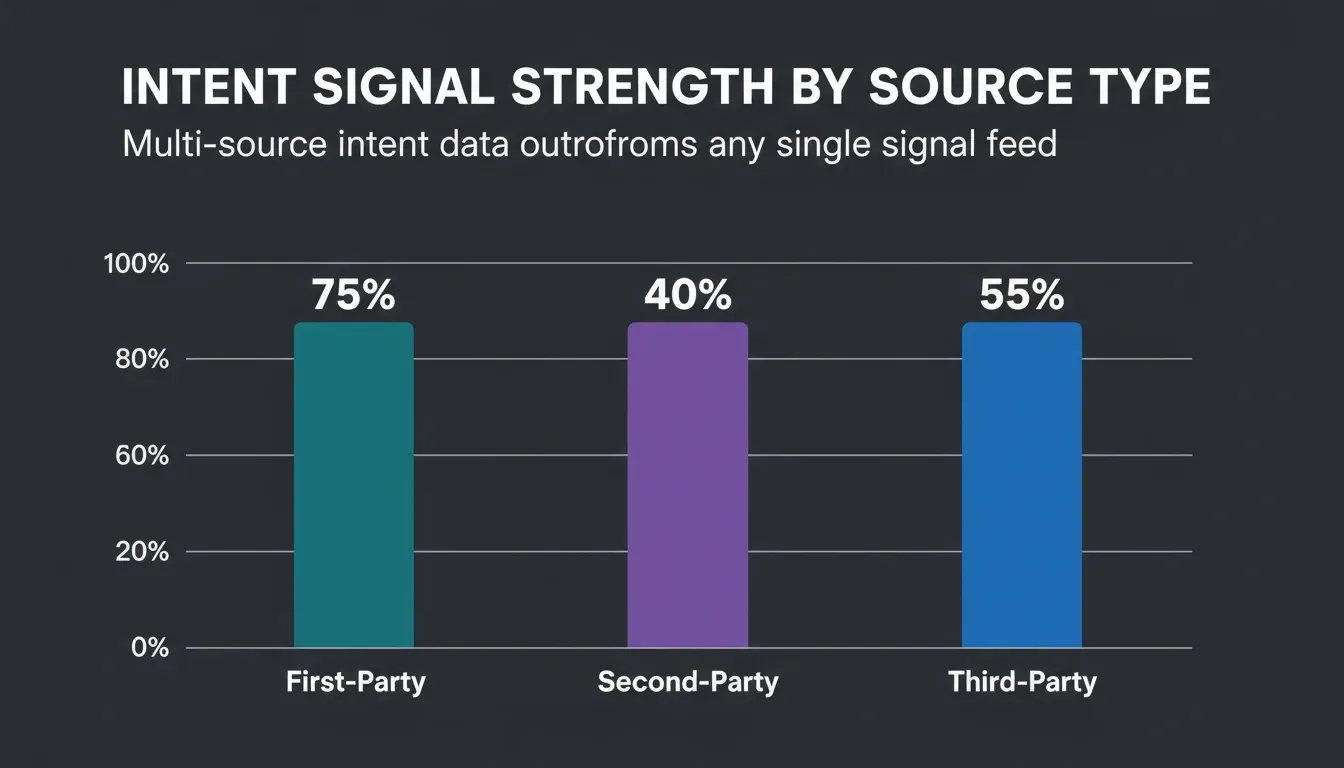
Multi-source intent data consistently outperforms any single signal feed - combining all three tiers gives the fullest picture of buyer behavior.
How Do Sales and Marketing Teams Use Intent Data?
Knowing which accounts are researching in your category is only valuable if it changes how you act. Intent data reshapes account prioritization, campaign timing, and outreach personalization across every GTM function.
-
Sales teams use intent data to separate active buyers from passive observers, focusing reps on accounts with the highest buyer intent right now.
-
Marketing teams use intent data to trigger account-based marketing campaigns at the exact moment target accounts are actively researching - not before, not after.
-
Customer success teams use intent data to catch renewal risk and expansion signals early, before they turn into churn.
Lead Scoring and Pipeline Prioritization
Lead scoring is where intent data delivers the most immediate impact for sales teams. It cuts through a crowded CRM and surfaces the accounts worth calling this week.
-
Buyer intent signals layered on top of ICP fit: separate active buyers from passive observers, letting sales reps focus where deal potential is genuinely highest right now.
-
Lead scoring models that include intent data signals are significantly more predictive than those built on firmographic fit alone.
-
Revenue attribution improves, too: when a rep reaches out at the moment buyer intent peaks, and the deal closes, the signal-to-outcome connection becomes traceable and repeatable.
Sales reps stop working a static list and start responding to live intent data signals. That shift from calendar-driven outreach to signal-driven action is where the sales cycle shortens.
Account-Based Marketing and Personalized Campaigns
For marketing teams, buyer intent is the timing layer that makes account-based marketing actually land. Without it, even the best-targeted campaigns hit accounts at the wrong moment.
-
Intent data lets marketing teams trigger campaigns when target accounts are showing active buyer intent around your category - not six weeks before or after the research window opens.
-
Content engagement patterns expose which pain points are driving buyer interest, so marketing campaigns address real concerns rather than assumed ones.
-
Buyer personas sharpen considerably when built from real-time intent data rather than ICP assumptions that have not been refreshed since last quarter.
Timing driven by real buyer intent signals - not a fixed content calendar - consistently produces more qualified leads and better ad spend efficiency for marketing teams.
| Team | Primary Use Case | Key Intent Data Benefit |
|---|---|---|
| Sales | Prioritize high-intent accounts | Shorter sales cycles, higher win rates |
| Marketing | Trigger campaigns tied to research spikes | Better ad spend, more qualified leads |
| Customer Success | Spot renewal risk and expansion signals | Reduced churn, stronger upsell pipeline |
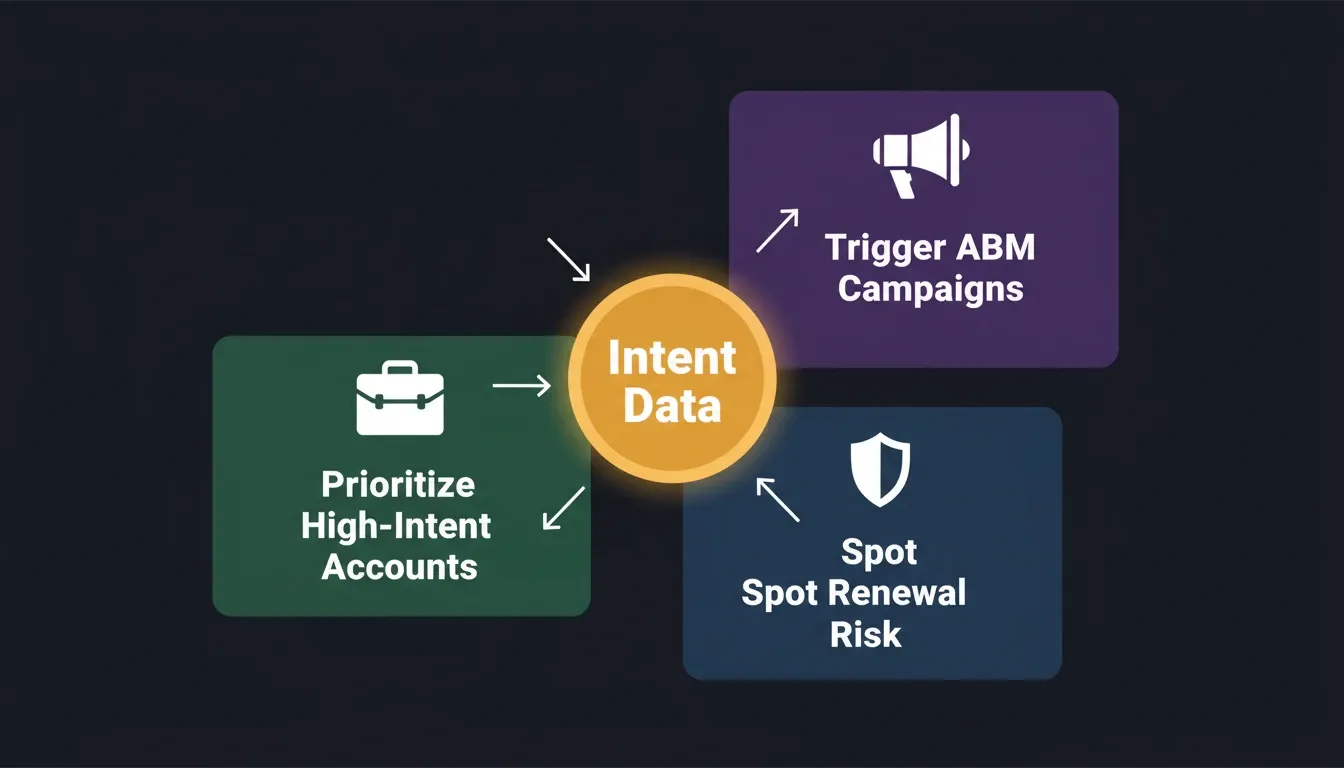
Sales, Marketing, and Customer Success each draw different value from the same intent data - the signal is the same, the action differs by role.
Is It Possible to Act on Intent Without Spooking Your Prospects?
The concern about misusing intent data comes up in almost every sales team conversation about this topic. The issue is not the data itself - it is how teams choose to use it.
-
Lead with value, not visibility: If an account is researching specific pain points, address those pain points in your outreach naturally - do not reference their browsing activity directly.
-
Use buyer intent to time your outreach, not to justify it: The intent signals are your invisible context, not an opening line to quote back to a prospect.
-
Let engagement metrics qualify follow-ups: An email open, a return to your pricing page, or a case study click are valid buyer intent signals worth acting on. A single anonymous page view is not.
-
Match your message to the buying stage: High-intent accounts in an active buying cycle need case studies, pricing details, and access to key decision makers. Early-stage accounts need education first.
Intent data works best as invisible context. When you show up with the right message at the right moment, prospects feel understood, not tracked, and that is when real conversations start.
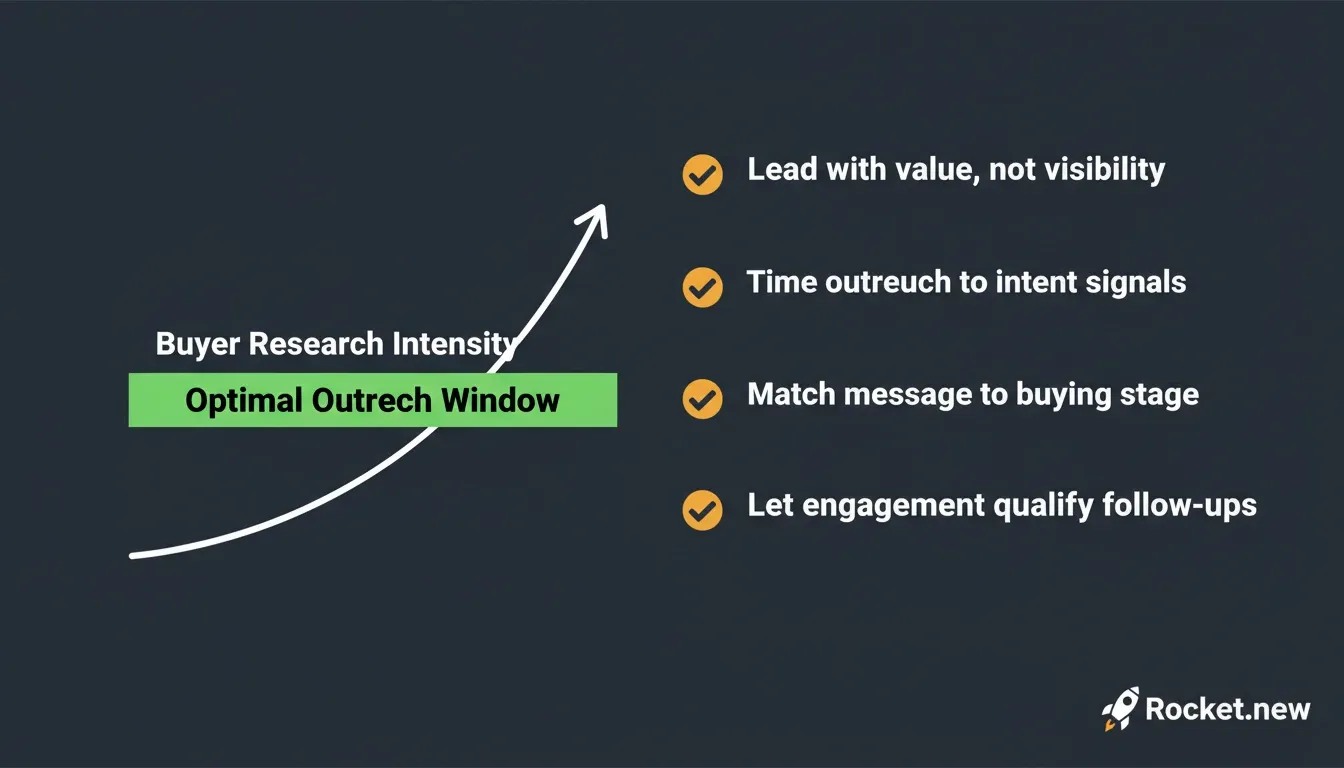
The optimal outreach window is narrow; intent data is the only reliable way to know when you are inside it.
How Rocket Intelligence Finds In-Market Accounts for You
Most intent data tools were built for enterprise GTM teams with full-time data operations staff. For leaner teams, the setup complexity and contract structures create more friction than they resolve.
Rocket Intelligence is built differently. It monitors companies you care about across ten intelligence pillars, website, social, news, GTM, traffic, product, people, business, reviews, and a cross-pillar overview - running in parallel to surface what matters as it happens.
-
Every company on Rocket has a free public profile. Follow any account and watch intent data signals update in real time, without a CRM connection or data pipeline to configure.
-
Buyer intent context is matched to your role. Sales reps, marketers, and customer success team members each receive the signals most relevant to their specific function.
-
6sense and ZoomInfo require CRM connections, professional services engagements, and weeks of configuration before intent data reaches your sales teams. Rocket Intelligence is live in minutes.
-
Enterprise intent data platforms frequently deliver signals that are weeks old by the time they reach the sales rep. Rocket surfaces what matters as it happens.
The setup takes 30 seconds. Follow your first in-market account, and Rocket watches it for you - no long-term contract, no dedicated data team required.
Rocket Intelligence monitors ten pillars simultaneously - each one a different dimension of a company's competitive activity.
Rocket Intelligence surfaces buyer intent from in-market accounts in real time. The key decision makers at your target companies are already updating pricing pages, posting job listings, and generating signals across every public surface - all live buying signals. Start free and follow your first account at Rocket Intelligence.
Turn Intent Signals Into Pipeline Before Your Competitors Do
Intent data closes the visibility gap between when accounts start researching and when they finally speak to a vendor. Sales teams that act on buyer intent signals early reach the right accounts first, have sharper conversations, and build a pipeline from companies that are genuinely ready to buy.
The question is not whether your next customer is already out there showing buying signals and moving through a decision process. They almost certainly are. The question is whether your sales intelligence tools can surface them before your competitors get there first.
Ready to track in-market accounts before your competitors?
Start free with Rocket Intelligence and follow your first account today.
Table of contents
- -What Does Intent Data Actually Tell You?
- -Signal Types and Sources
- -First-Party Intent Data: Signals from Your Own Site
- -Third-Party Intent Data and Data Providers
- -How Do Sales and Marketing Teams Use Intent Data?
- -Lead Scoring and Pipeline Prioritization
- -Account-Based Marketing and Personalized Campaigns
- -Is It Possible to Act on Intent Without Spooking Your Prospects?
- -How Rocket Intelligence Finds In-Market Accounts for You
- -Turn Intent Signals Into Pipeline Before Your Competitors Do