
Teams that want to build AI apps in minutes now have a clear path: describe what you need, validate the idea, and ship a working product without months of planning or complex development cycles.
Can teams really build AI apps in minutes?
Yes! A 2024 McKinsey study reports that teams using workflow-driven AI software reduce delivery cycles by nearly 60%. That change reshapes how products reach users and how teams respond to demand.
Speed now defines expectations across modern software teams.
Products no longer wait in long queues. An idea moves directly into action. With the right platform, teams can build apps faster while maintaining control over logic, data, and users.
Speed Has Become the New Baseline
Speed is now central to modern app development. Markets shift quickly. User behavior changes without warning. Teams that move fast and validate early stay relevant and responsive.
Fast builds also reduce risk. Short cycles allow teams to test assumptions early. A working app reaches users sooner. Feedback arrives while changes still feel easy.
As a result, demand for tools that enable apps in minutes continues to grow. Teams want progress without a complex setup. They want clarity instead of friction. Speed also reshapes internal work: operations apps, reporting tools, and customer portals no longer need months of planning.
Why Custom Workflows Matter More Than Ever
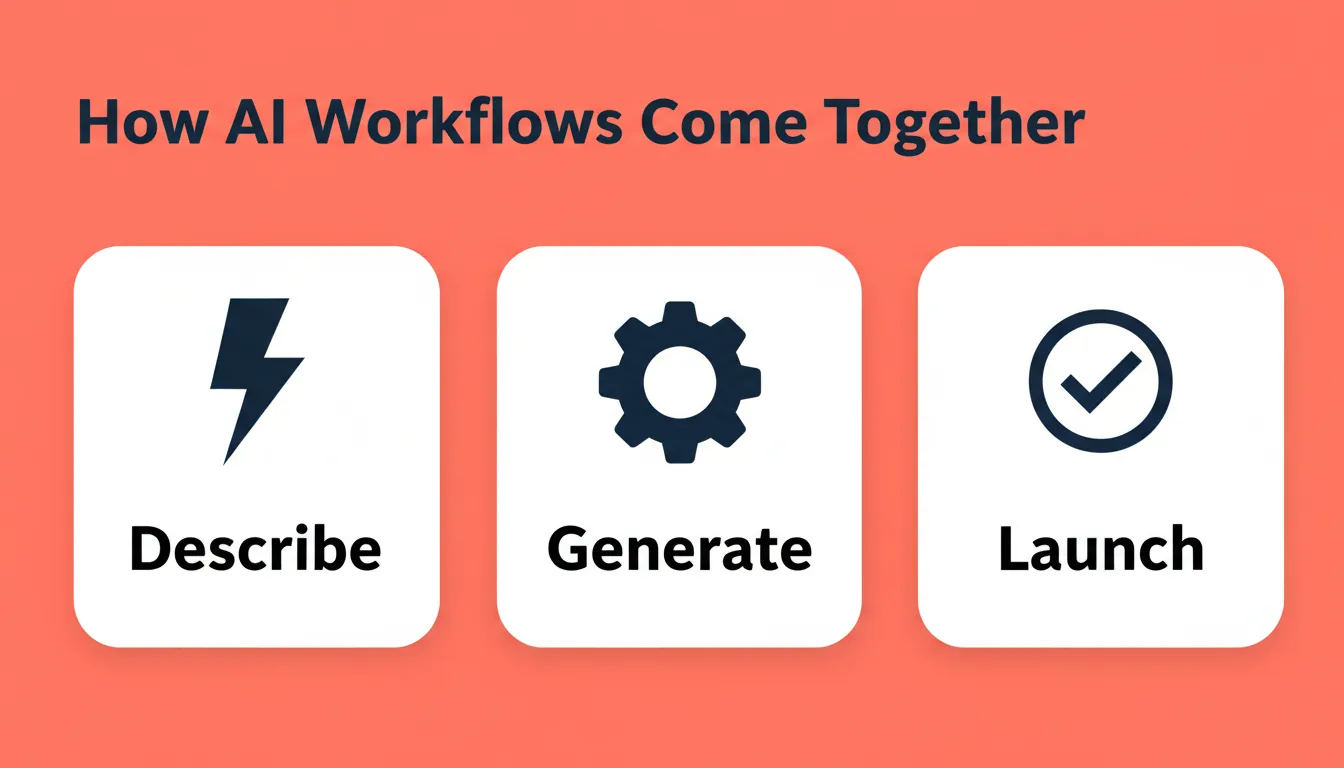
Custom workflows simplify how logic comes together. Rather than wrestling with rigid scripts, teams describe flows in plain language. The AI interprets intent and connects actions naturally.
Each workflow ties together screens, backend logic, and database events. Steps can be modified without breaking the app. That flexibility removes much of the fear around updates and experimentation.
This approach works especially well for non-technical users. Limited coding experience no longer blocks progress. Teams with stronger coding knowledge can still extend logic when needed. Custom workflows also support business process automation. Approval flows, internal dashboards, and customer portals stay easy to manage.
According to Gartner, low-code and no-code development will account for 70% of new application activity by 2025. This reflects the industry-wide shift toward workflow-based app creation.
Validate Before You Build: The Step Most Teams Skip
The most expensive mistake in any product is not bad execution. It is a good execution of the wrong thing.
Before writing a line of code, teams that build AI apps in minutes typically validate their idea first. Solve addresses this directly. Describe the situation in plain language: a market entry question, a feature decision, or a competitive concern. Solve runs thousands of queries across 150+ sources simultaneously.
Within 60 to 90 minutes, what would have taken a research team days is complete. The output covers market sizing, competitive landscape, risk matrix, and an execution path with clear recommendations. It exports as a PDF or presentation deck. The output does not disappear after export. It becomes the foundation of every Build task that follows.
Teams that skip this step build fast. Teams that use it build right.
Turning an App Idea Into Reality
Every project starts with an app idea. Some ideas stay focused from day one. Others grow as users respond and needs become clearer. A clear idea helps define core features early. That clarity keeps scope under control and generated applications free of confusion.
In Rocket's Build pillar, generation takes 1 to 3 minutes for most apps. The live preview appears the moment generation finishes. From there, teams iterate through three modes:
- Chat: natural language instructions, no re-explaining what exists
- Visual Edit: click any element in the preview to change text, style, or layout directly
- Code: full access to the generated Next.js or Flutter source files
Ideas also evolve through conversation with users. Feedback shapes priorities, and small adjustments often lead to stronger outcomes.
Six Ways to Start a Build
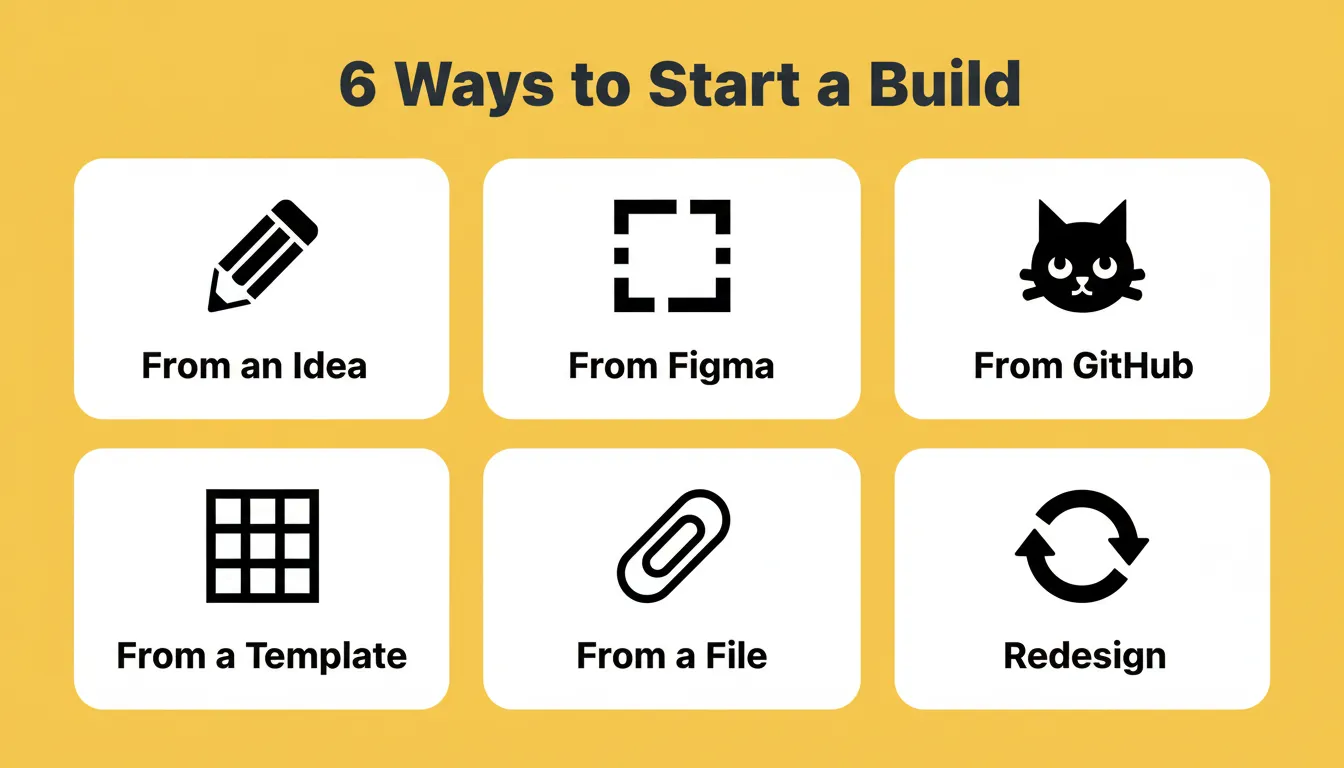
One of the most common questions teams ask is: where do I begin? There are six distinct starting methods, each suited to a different situation:
| Starting Method | Best For |
|---|---|
| From an idea (plain language) | Starting fresh with a description |
| From an attachment | Have a screenshot, PDF, or spreadsheet to build from |
| From Figma | Completed Figma designs ready to become working code |
| From GitHub | Existing Next.js TypeScript codebase to enhance |
| From a template | Common pattern (SaaS, landing page) — want something fast |
| Redesign (from a URL) | Rebuilding or redesigning an existing live website |
Templates consume zero credits. Customization via chat starts credit usage, making templates the fastest entry point for common patterns. For a deeper walkthrough of the full process, the guide on how to build an app with AI in minutes covers each method step by step.
Building for Web and Mobile Together
Teams decide where the app should live. A web app often launches first. iOS and Android apps follow soon after, built from a single codebase.
Rocket generates web applications in Next.js and mobile applications in Flutter. One Flutter codebase covers both iOS and Android. Mobile apps ship with real design systems, dark and light theming, fluid navigation, and staggered animations. They are production quality from the first generation, not prototypes.
For teams ready to build production-ready mobile apps, Rocket supports three distribution paths:
Mobile App Distribution Options
| Distribution Method | Speed | Audience | Cost |
|---|---|---|---|
| Web preview | Instant | Anyone with a link | Free |
| APK download | Minutes | Android testers | Included with paid plan |
| Google Play Store | Days to weeks | Public | $25 one-time developer account |
| Apple App Store | Days to weeks | Public | $99/year developer account |
Cross-platform deployment no longer slows teams down. One-click tools publish updates fast, and a custom domain adds trust and polish.
Handling Data and Logic Without Stress
Data becomes central once the app is live. Apps query databases constantly, so clean structures support long-term scale. Rocket connects database actions directly to workflows. External API calls add flexibility, and apps can send emails, trigger webhooks, and connect to external services within flows.
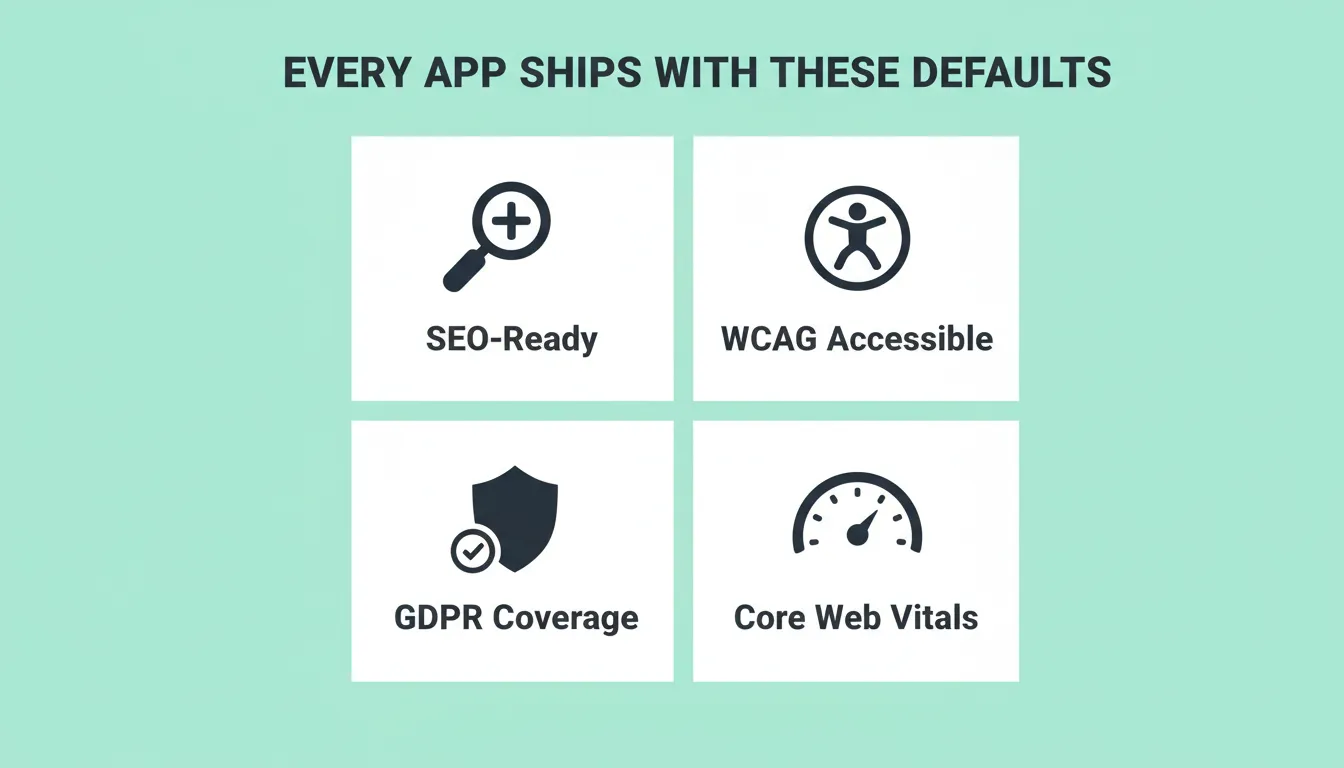
Every app built in Rocket ships with these defaults, not as optional extras:
- SEO-ready structure: metadata, semantic HTML, sitemap
- WCAG accessibility compliance: screen reader support, contrast ratios, keyboard navigation
- GDPR coverage: privacy-ready defaults baked into the build
- Performance optimization: Core Web Vitals optimized from generation
Authentication systems protect access. Secure flows repeat across projects, helping users feel confident when sharing data.
Traditional Builds vs Workflow-Based Builds
| Dimension | Traditional Build | Workflow-Based Build |
|---|---|---|
| Setup time | Long, multi-week setup | App in minutes |
| Code required | Heavy code writing | No-code focus |
| Test cycles | Slow, manual loops | Fast iterative loops |
| Tooling | Many separate tools | One unified platform |
| Ownership | Fragmented across teams | Full team ownership |
| Compliance defaults | Manual configuration | SEO, WCAG, GDPR by default |
| Scalability | Requires rewrites | Incremental additions |
25+ Integrations That Flow Into Every Build
One of the most underappreciated advantages of building on a unified platform is integration depth. Authenticate once at the workspace level and 25+ services flow into every build automatically:
Payments: Stripe, PayPal
AI providers: Anthropic, OpenAI, Gemini, Perplexity
Databases and CMS: Supabase, Strapi, Directus, Airtable
Email and messaging: Mailchimp, Brevo, MailerLite, SendGrid, Twilio, Resend
Analytics: Google Analytics, Mixpanel
Productivity: Notion, Linear, Google (Docs, Sheets)
Forms and scheduling: Typeform, Tally, Cal.com, Calendly
Advertising: Google AdSense
No separate configuration is needed per project. Every integration connects at the workspace level and carries into every task automatically.
Scaling Without Losing Ownership
Growth arrives. More users sign up. Features expand. Data volume increases. Workflow-driven platforms handle scale without requiring rewrites. Teams add features incrementally and modify logic in context.
Rocket's deployment infrastructure includes staging and production environments, full version history, and one-click rollback. Nothing built is ever gone. Built-in analytics tracks visitors, conversions, accessibility scores, and Core Web Vitals after launch, with zero setup required.
Full ownership matters here. Teams keep control over custom apps. Source code is downloadable at any time, and projects remain portable as demand grows.
How Rocket Enables Fast Workflow Creation
Rocket is the world's first Vibe Solutioning platform, where businesses research what to build, build it, and monitor what matters, all in one place.
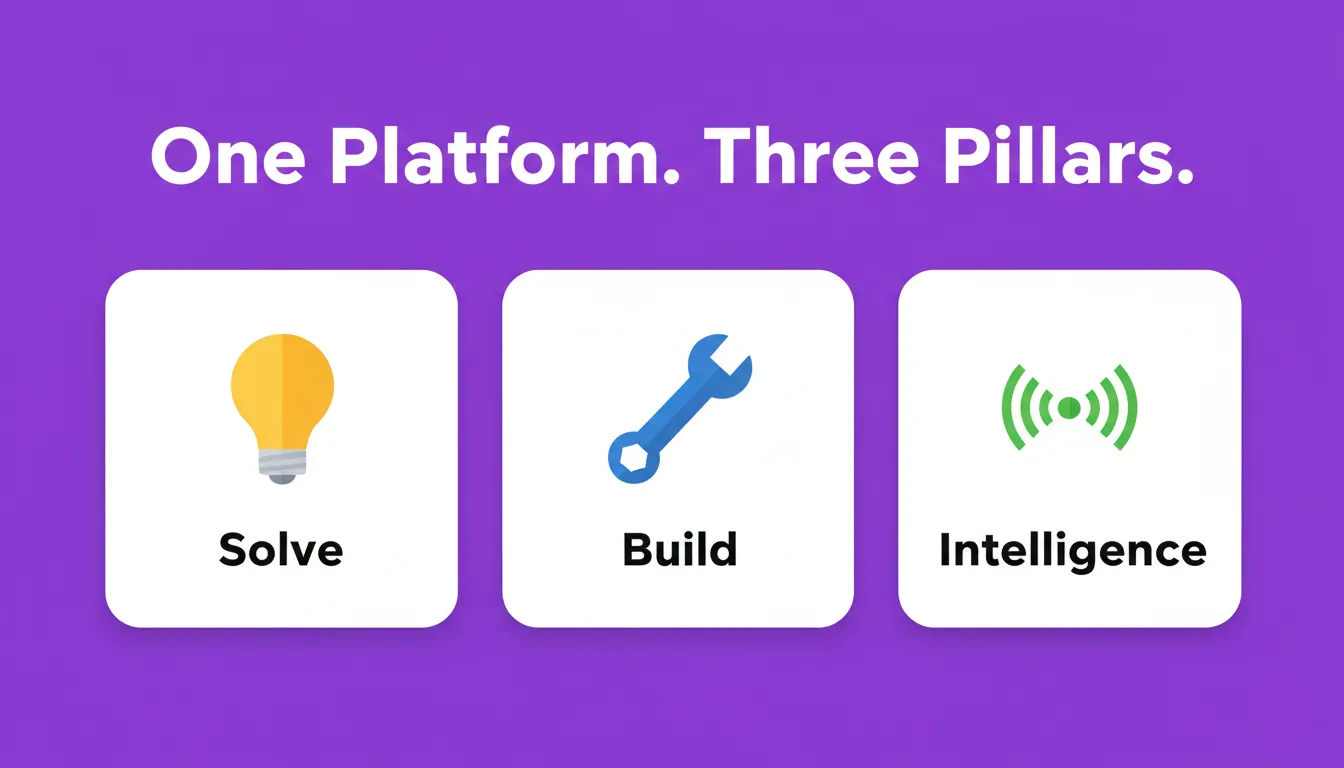
Key capabilities include:
- Solve: any business question to a complete structured solution, ready to act on or build from
- Build: production-grade Next.js web apps and Flutter mobile apps from natural language
- Intelligence: continuous competitive monitoring across every public platform a competitor operates on
- Redesign: eight slash commands to reimagine any existing website
- Context: persistent shared memory; files and research added once carry into every task
- Collaborate: team workspaces with three-level role-based access (Admin, Creator, Viewer)
- Human Help: Rocket's Success team steps in inside the platform when the AI reaches its limit
Testing, Editing, and Launching With Confidence
Testing stays constant. Teams test early and often. Short loops catch issues before they spread. Screens are easy to edit, workflows can be modified at any time, and new integrations connect as requirements shift.
Launch marks a milestone, not the end. Teams publish updates regularly, and users appreciate steady progress and visible improvements. Free plans support early projects, while paid tiers offer more support and capacity.
The Future of Building AI Apps in Minutes
The ability to build AI apps in minutes is no longer a competitive edge. It is the baseline. Teams that validate ideas before building, ship across web and mobile from a single workflow, and monitor the market continuously will consistently outpace those that treat building as the starting point.
As AI platforms mature, the gap between teams that think before they build and teams that just build will widen. The tools are ready. The question is whether the thinking that precedes the build is ready too.
You have an idea. Type it. Rocket researches the market, builds the product, and deploys it. Start building on Rocket.new today and your first app is minutes away.
Table of contents
- -Speed Has Become the New Baseline
- -Why Custom Workflows Matter More Than Ever
- -Validate Before You Build: The Step Most Teams Skip
- -Turning an App Idea Into Reality
- -Six Ways to Start a Build
- -Building for Web and Mobile Together
- -Mobile App Distribution Options
- -Handling Data and Logic Without Stress
- -Traditional Builds vs Workflow-Based Builds
- -25+ Integrations That Flow Into Every Build
- -Scaling Without Losing Ownership
- -How Rocket Enables Fast Workflow Creation
- -Testing, Editing, and Launching With Confidence
- -The Future of Building AI Apps in Minutes