Diesel Mechanic Fleet Quote Landing Page Template
Torque is a high-impact editorial landing page template built for diesel mechanic shops that serve commercial fleets. It combines a bold manifesto header, logo wall credibility section, case-study-style proof blocks, and a focused B2B quote request form into one shop-floor-serious page. The design speaks directly to fleet managers and owner-operators who cannot afford downtime.
by Rocket studio
Quick summary
Torque is an editorial-style landing page template designed for diesel mechanic businesses targeting fleet accounts. It leads with an oversized manifesto headline, establishes credibility through a logo wall, and builds trust through case-study proof blocks before presenting a clear fleet pricing request form. Every design decision is built for B2B conversion.
Who this template is for
This template is purpose-built for diesel repair shops that want to win commercial accounts rather than one-off walk-ins. It speaks the language of people who manage equipment as a business asset.
- Fleet service shops targeting Peterbilt operators, construction outfits, or long-haul carriers
- Independent diesel mechanics ready to pitch long-term service contracts to fleet managers
- Shop owners who want a professional first impression that earns credibility before asking for the sale
What problem this template solves
Most diesel mechanic websites look like generic contractor pages. They fail to communicate technical fluency to the procurement managers and fleet supervisors who make vendor decisions. This template fixes that gap.
- Generic pages lose B2B buyers who need proof of commercial diesel expertise before making contact
- No clear form path means fleet managers leave without submitting a quote request or fleet pricing inquiry
- Weak visual identity fails to signal the shop-floor seriousness that high-stakes clients expect
What you get with this template
You get a single-page layout built entirely around earning and capturing a B2B diesel service inquiry. Every section pulls the visitor one step closer to submitting a request.
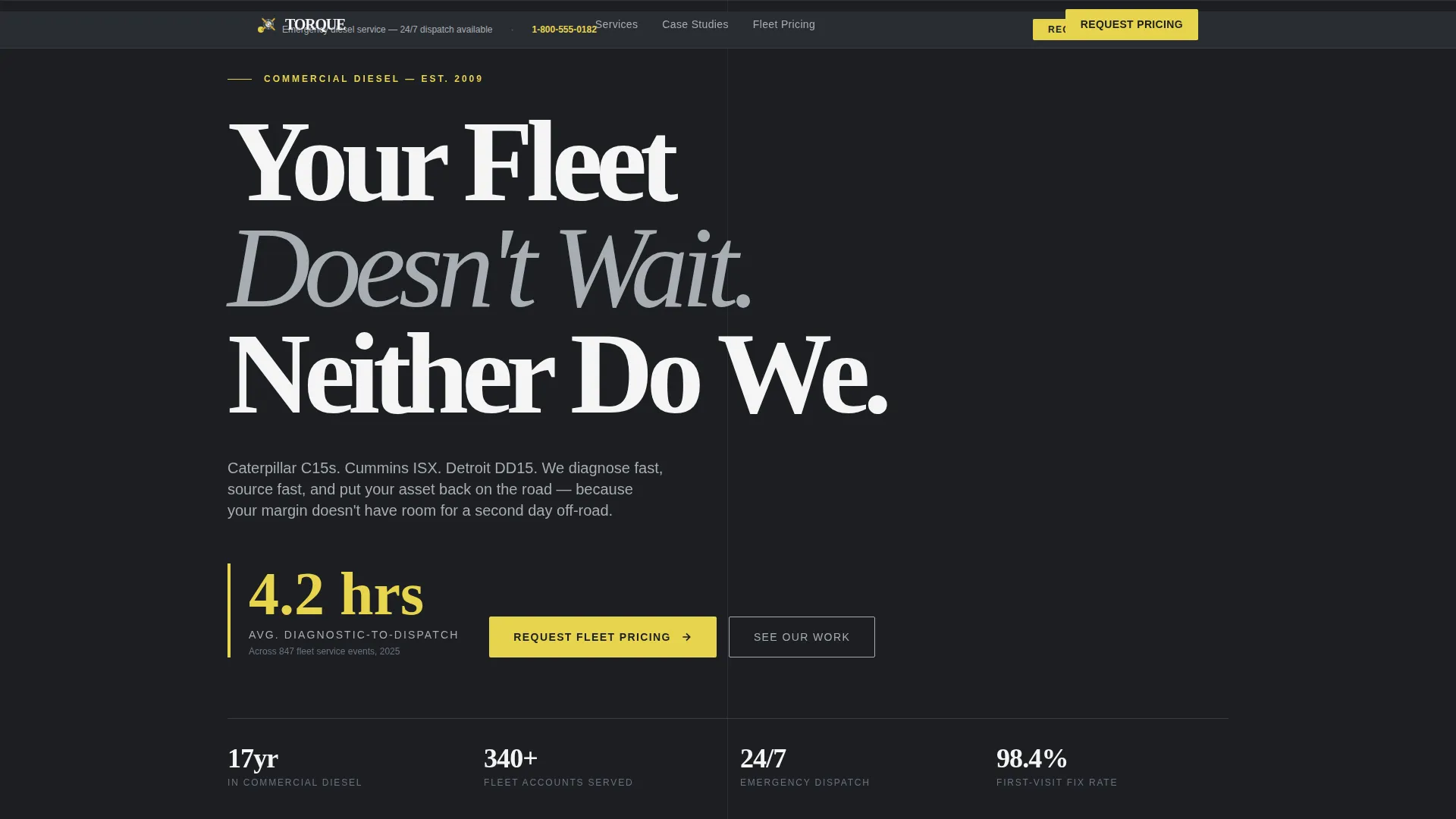
- A bold manifesto header section with oversized editorial typography and a single high-visibility stat pull-quote
- A horizontal logo wall band, editorial case-study blocks with pull-quotes, and two conversion-focused call to action placements
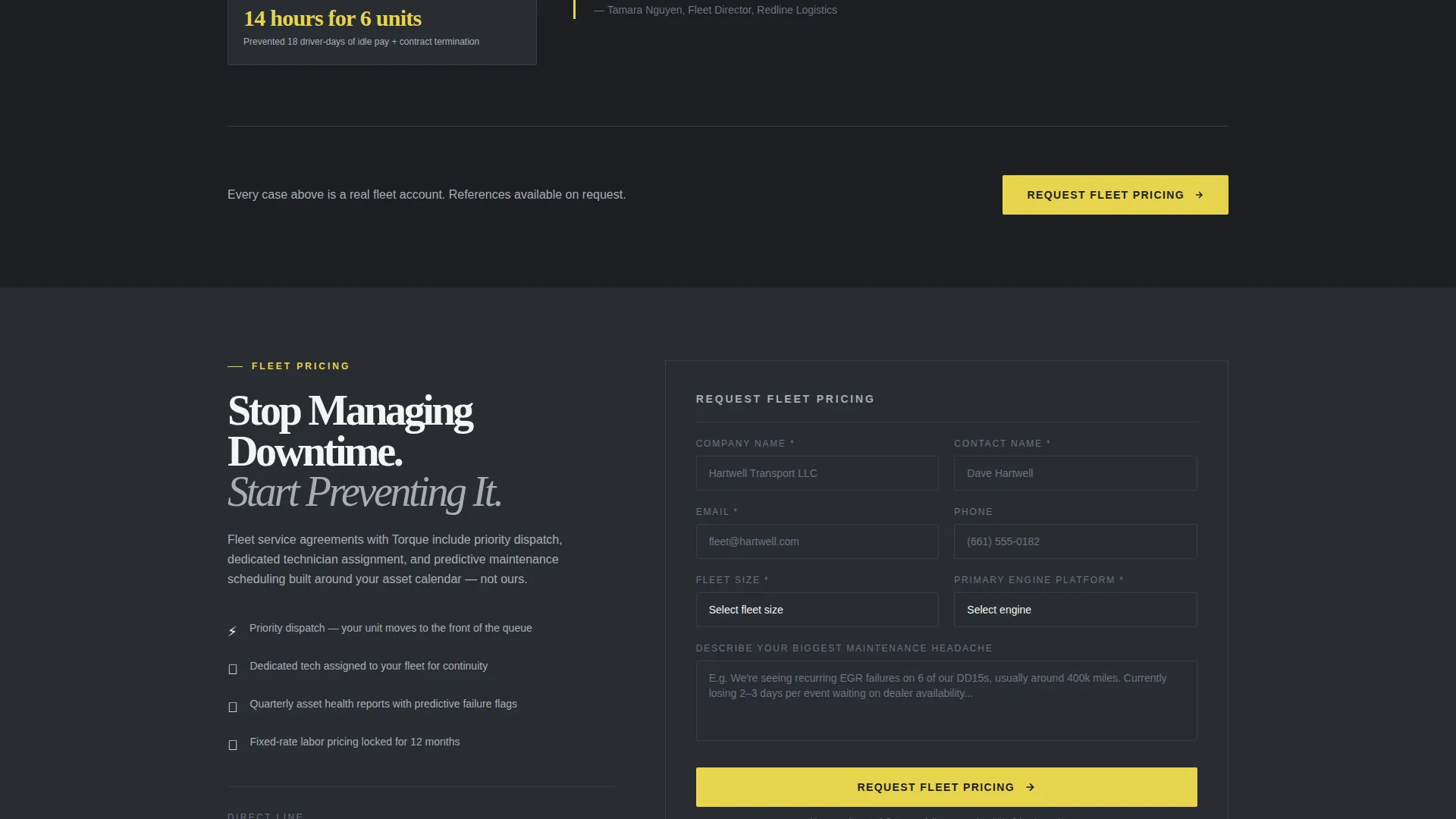
- A structured quote request form with company name, fleet size dropdown, engine platform field, and a free-text maintenance description field
Feature list
This section details the core built-in components of the Torque landing page template.
Quote and Manifesto Header
The header uses oversized editorial typography set against a dark charcoal background. The headline sits in machined aluminum type with tight kerning. A single diagnostic-to-dispatch stat is rendered in safety yellow beneath it, acting as a pull-quote that builds immediate credibility.
Logo Wall Credibility Band
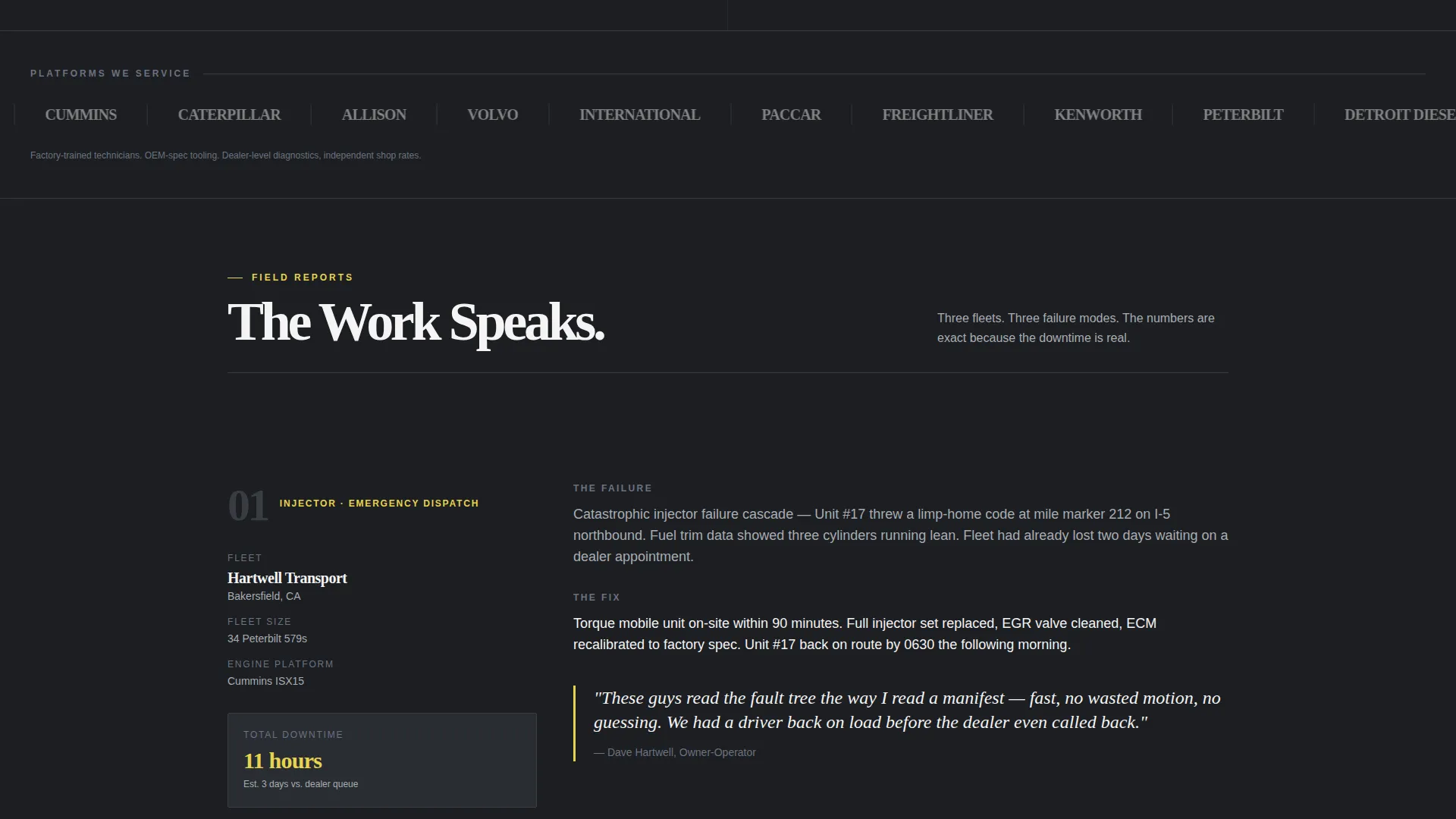
A horizontal band sits directly beneath the manifesto. It is designed to display fleet and original equipment manufacturer logos in a clean row. This placement establishes industry-level authority early in the scroll before any copy makes a claim.
Editorial Case-Study Proof Blocks
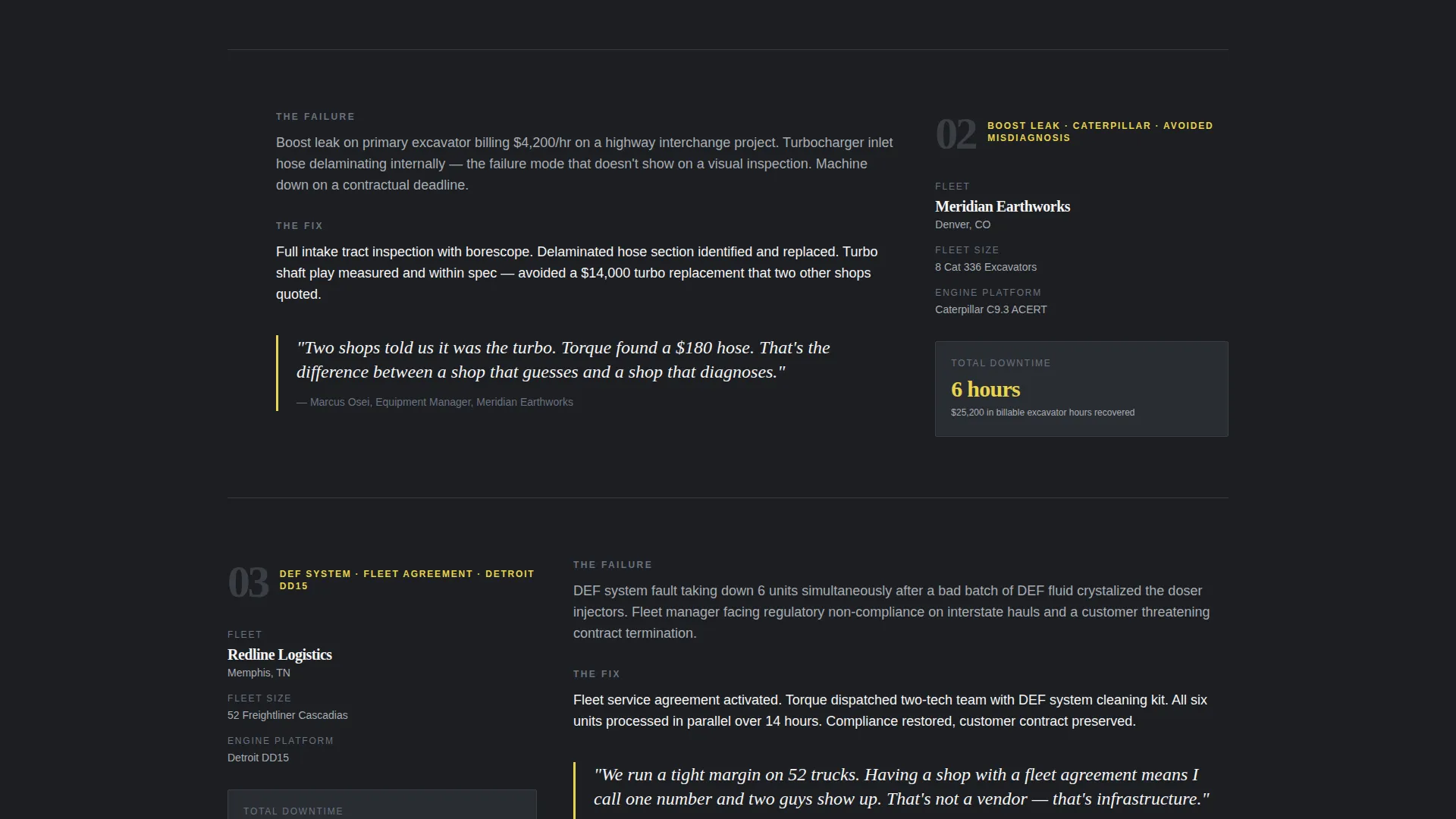
Each case block is typeset like a magazine feature article. It presents a fleet name, the mechanical failure, the fix applied, and the downtime saved. Pull-quotes from fleet managers break up the dense technical content with human authority.
Fleet Pricing Request Form
The primary conversion form captures company name, fleet size via a four-tier dropdown (1 to 5, 6 to 20, 21 to 50, and 50 or more vehicles), primary engine platform, and a free-text field labeled "Describe Your Biggest Maintenance Headache." This structure qualifies leads before they make contact.
Fixed Utility call to action Bar
After the logo wall, a fixed utility bar carries the primary call to action. It stays visible as the visitor scrolls through proof sections. A second full-width version of the call to action appears near the bottom of the page.
Service Capabilities PDF Download Path
A secondary conversion path invites procurement managers to download a service capabilities document. This captures email addresses from buyers who are still building their vendor shortlist rather than ready to request pricing immediately.
Page sections overview
| Section | Purpose |
|---|---|
| Manifesto Header | Headline, stat pull-quote, and page entry |
| Logo Wall Band | Fleet and OEM credibility at a glance |
| Case Study Blocks | Technical proof via editorial-style stories |
| Fixed call to action Bar | Persistent fleet pricing request access |
| Quote Request Form | Structured lead capture for fleet inquiries |
| PDF Download Path | Secondary email capture for early-stage buyers |
| Full-Width call to action | Bottom-of-page primary conversion section |
Design & branding system
The Monochrome Steel color system uses every shade deliberately. Nothing is decorative. The palette communicates shop-floor authority without a single unnecessary element.
- Shop-floor charcoal (#1C1E22) forms the dominant background, machined aluminum (#A8ADB3) carries primary typography, and clean white (#F4F4F4) provides typographic breathing room between dense sections
- High-visibility safety yellow (#E8D44D) is reserved exclusively for calls to action and critical stat callouts, functioning like a caution stripe on a lift arm
- Editorial typography is set with tight kerning in the header and generous white space between case blocks to create a magazine-style reading rhythm
Mobile & speed optimization
The layout is designed so the most important conversion elements remain accessible and readable at any screen size. The fixed utility bar and form are central to this approach.
- The fixed call to action bar adapts to smaller viewports so the fleet pricing request remains reachable without scrolling back up
- Case-study blocks and the logo wall are structured for vertical stacking on mobile without losing their editorial rhythm
- The form fields, including the fleet size dropdown and the free-text maintenance description, are sized for comfortable touch input
How this template helps you convert
The page is structured to earn trust before it makes any ask. By the time a visitor reaches the form, they have already consumed proof that justifies the inquiry.
- The manifesto header and stat pull-quote establish immediate authority, setting a confident tone that filters for serious commercial buyers from the first scroll
- The logo wall and case-study blocks build layered credibility, moving the visitor from general awareness to specific technical trust before any call to action appears
- Two strategically placed conversion points, the fixed utility bar and the full-width bottom section, ensure the fleet pricing request form is accessible at the exact moment a buyer decides to act
Other information about this template
This template is part of a broader Service Utility theme direction designed for trades and technical service businesses that need B2B-grade presentation without corporate bloat.
- The template style is Editorial and Magazine, which means layout decisions borrow from long-form journalism rather than standard contractor website conventions
- The creative direction follows a Logo Wall Authority approach, prioritizing credibility markers early in the scroll to shorten the trust-building process for procurement managers
- The template is suited to diesel mechanic businesses operating in heavy equipment, long-haul trucking, and construction fleet service contexts
Theme
Service Utility
Creative direction
Logo Wall Authority
Color system
Monochrome Steel
Style
Editorial/Magazine
Direction
Partnership/B2B
Page Sections
Quote and Manifesto Header
Logo Wall Credibility Band
Editorial Case-study Blocks
Fleet Pricing Request Form
Fixed Utility Call to Action Bar
PDF Download Secondary Path
Related questions
Who is the primary audience for this landing page template?
What makes this template different from a standard mechanic website template?
Does the template include both primary and secondary conversion paths?
Can I customize the form fields to match my shop's services?
Is the safety yellow color used throughout the entire design?