Environmental Consulting Blog Website Template
Tilth is a hero-dominant landing page template built for agrarian soil testing labs. It leads with a full-viewport animated soil column infographic, walks visitors through a four-step lab process, and presents three kit tiers before driving a single clear click to the order page. The warm stone palette and editorial layout make complex soil science feel trustworthy and approachable.
by Rocket studio
Quick Summary
Tilth is a single-page, click-through landing page template designed for soil testing laboratories. It opens with a 90-percent-viewport hand-illustrated soil column, guides visitors through the real lab process, and closes with a confident call to action. The design bridges scientific precision with actionable benefits for row-crop growers, vineyard managers, and hobby gardeners.
Who This Template Is For
This template is built for soil testing labs that need to convert skeptical, busy growers into kit buyers without relying on stock photography or vague promises.
- Row-crop growers dealing with inconsistent yields across a field
- Vineyard managers chasing terroir by understanding the chemistry beneath their vines
- Hobby gardeners who need clear answers after a raised bed fails a second year in a row
What Problem This Template Solves
Most soil testing pages bury the science or oversimplify it. Neither approach builds trust. Growers want to know exactly what happens to their samples and why the results matter. This template solves that by making the invisible visible through a transparent, step-by-step lab walkthrough.
- Visitors leave before converting because the process feels like a black box
- Generic pages fail to address the specific concerns of different crops and soil types
- A weak visual hierarchy buries the call to action and loses the click
What You Get With This Template
You get a fully structured landing page that moves visitors from curiosity to click in one confident scroll. Every section is purposeful, and no form stands between the visitor and the order page.
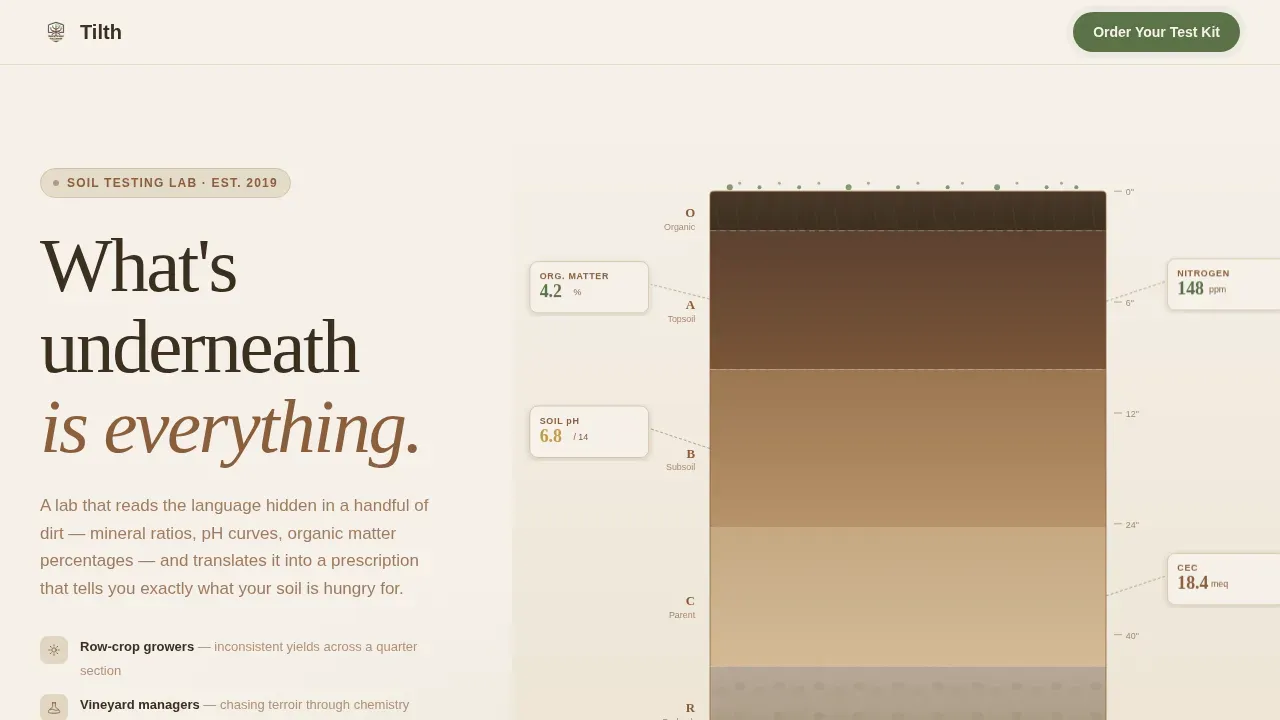
- An animated hero infographic showing a labeled soil column with live-style nitrogen, pH, and organic matter data points
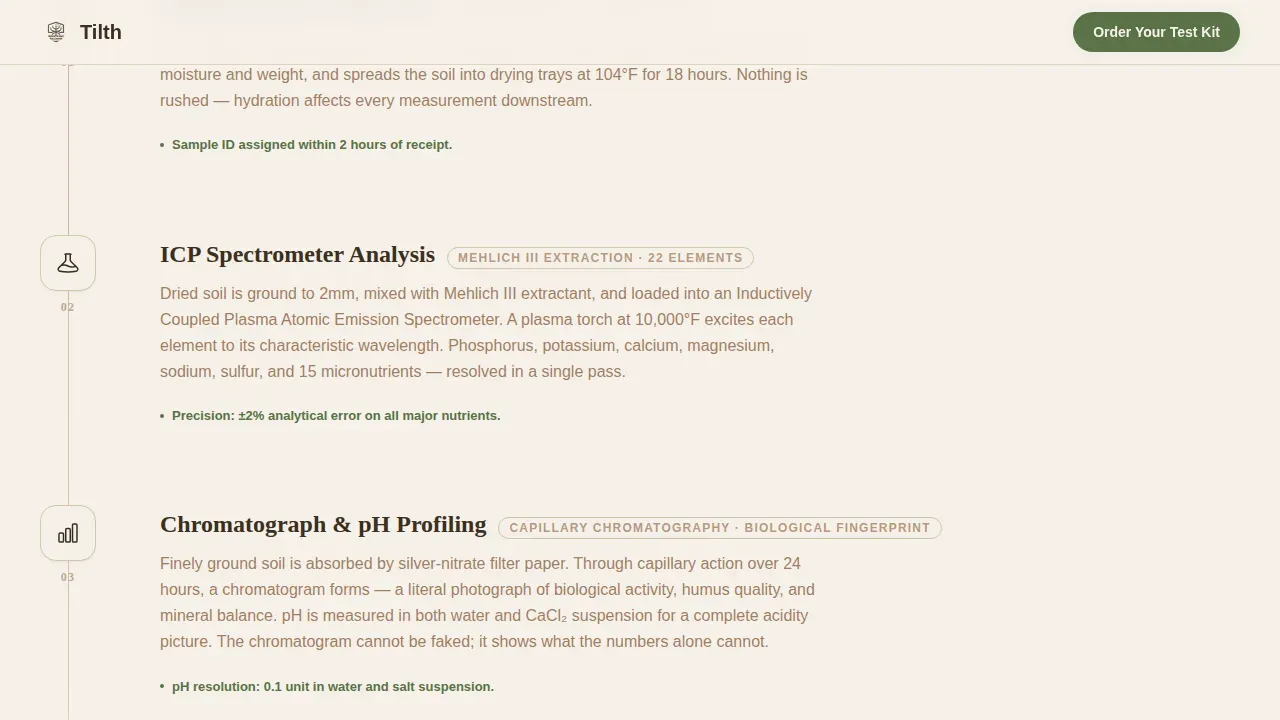
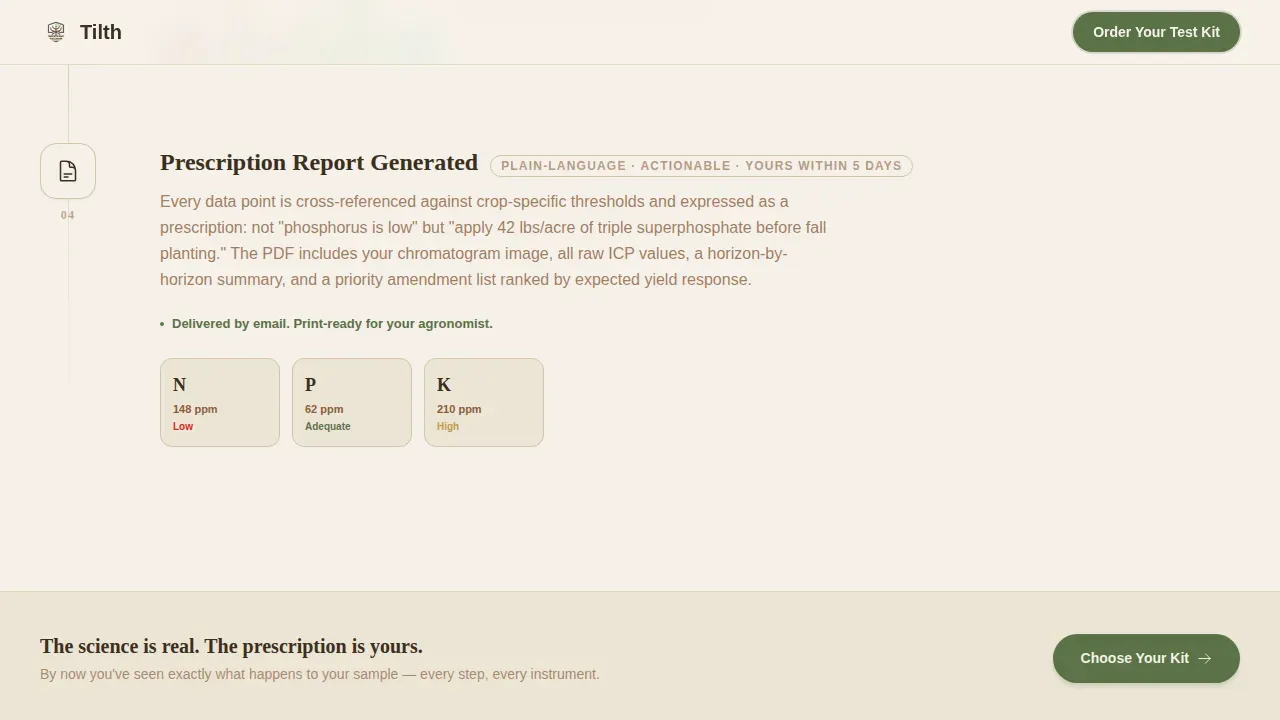
- A four-step numbered lab walkthrough from sample arrival to results PDF
- Three kit tier cards covering Basic Nutrient Panel, Comprehensive Soil Health, and Contaminant Screen
- A testimonials section with outcome-specific social proof from a grower, a vineyard manager, and a hobby gardener
- A footer reassurance strip with a prepaid return shipping note and a final "Order Your Test Kit" button
Feature List
This template includes six purpose-built components grounded in the source brief.
Animated Soil Column Hero
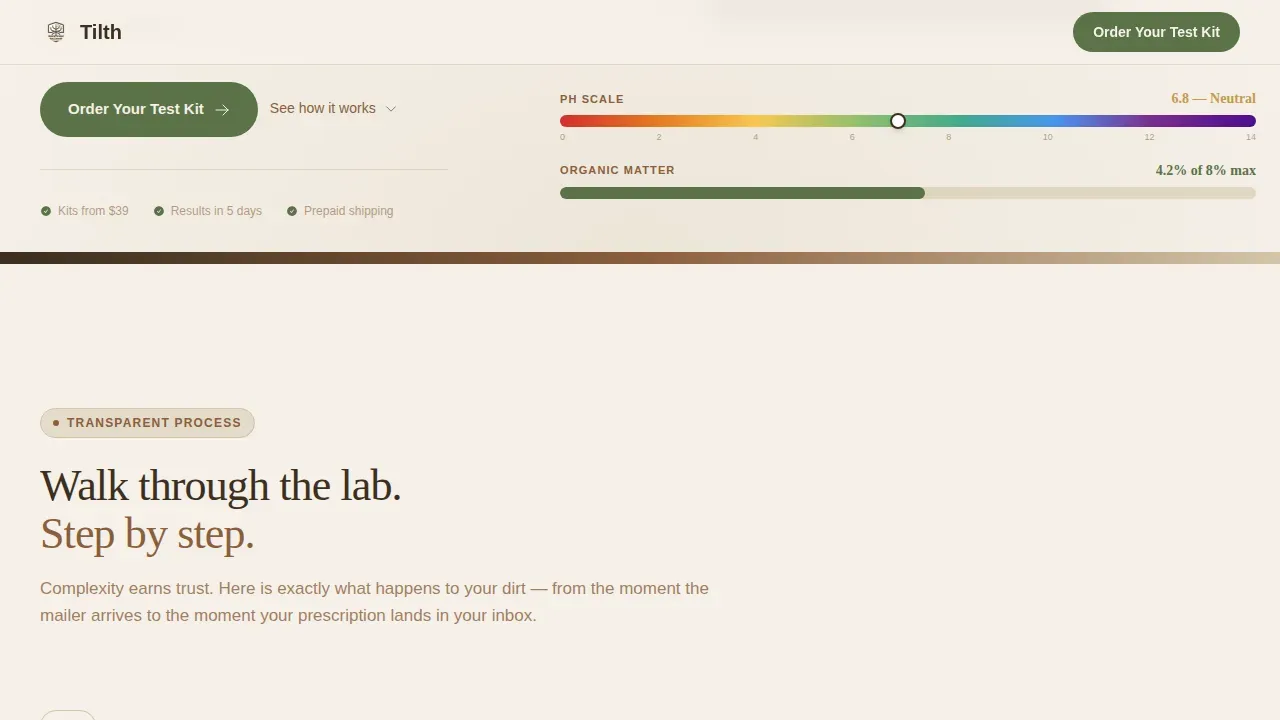
The hero fills ninety percent of the viewport with a hand-illustrated soil column. Animated data points quantify nitrogen parts-per-million, a pH gradient slides in real time, and an organic matter percentage bar fills on load. It replaces stock photography with authoritative editorial illustration.
Transparent Lab Walkthrough
Four numbered sections walk visitors through the real testing journey. Each step is narrated in plain language so visitors understand exactly what the lab does with their soil samples. Complexity earns trust here; the page clarifies rather than simplifies.
Three-Tier Kit Selector
Kit cards present the Basic Nutrient Panel, Comprehensive Soil Health, and Contaminant Screen side by side. Each card uses data highlights in chlorophyll green so visitors can quickly determine which tier matches their field and budget.
Outcome-Focused Testimonials
The social proof section surfaces specific results from three distinct client types. Grower yield improvements, vineyard pH correction outcomes, and gardener success stories each reinforce that the tests deliver real, field-proven value.
Repeating Click-Through calls to action
The primary "Order Your Test Kit" button appears three times: pinned at the base of the hero, after the lab walkthrough, and again in the footer strip. No form is present; every click carries the visitor directly to the kit selector page.
Footer Reassurance Strip
A single-row footer closes the page with a short confidence line about prepaid return shipping alongside the final call to action. It removes the last hesitation before a visitor commits to ordering.
Page Sections Overview
| Section | Purpose |
|---|---|
| Hero Infographic | Visualize soil chemistry with animated data |
| Lab Walkthrough | Show the four-step testing process |
| Kit Tier Cards | Present the three test options |
| Social Proof | Build trust with outcome testimonials |
| Final call to action Strip | Drive the last click to order |
| Footer Row | Close with shipping reassurance |
Design & Branding System
The visual identity follows an Agrarian Root theme built around a warm stone palette that feels like a cross-section of earth in a scientific textbook. Typography pairs Fraunces serif headlines with DM Sans body labels for editorial authority.
- Limestone (#D4C5A9) and living root white (#F5F0E8) keep backgrounds open and readable
- Deep furrow brown (#3B2F20) anchors all body text; iron-rich clay (#8B5E3C) marks section dividers and data labels
- Chlorophyll green (#5A7247) is reserved exclusively for calls to action and data highlights
Mobile & Speed Optimization
The template is built desktop-first to match how growers research, with full mobile support across all sections. The animated hero runs as a client component so static sections load independently.
- Scroll-triggered Intersection Observer reveals keep animations smooth and purposeful
- CSS keyframe counters drive the nitrogen and organic matter animations without heavy libraries
- Kit card hover states and process step interactions are kept lightweight for field-use devices
How This Template Helps You Convert
The page is engineered as a click-through experience. By the time a visitor reaches the second call to action, they have already seen what the lab measures and how it measures it.
- The animated hero makes soil chemistry tangible before a single word is read, earning immediate attention
- The lab walkthrough builds confidence that the science is real and repeatable, so the "Order Your Test Kit" click feels like a logical next step rather than a leap of faith
Other Information About This Template
This is the Tilth agrarian soil testing lab landing page template, designed specifically for the agriculture and environmental consulting niche. The following notes cover additional context useful before you build.
- Healthy soil that is high in organic matter content tends to have better water holding capacity, which reduces dependence on irrigation and artificial inputs
- Soil tilth refers to the physical condition of soil in relation to plant growth; good soil tilth supports root movement, air flow, and water infiltration
- Routine tests measure phosphorus, potassium, calcium, magnesium, zinc, and manganese alongside soil pH; the Presidedress Nitrate Test (PSNT) measures plant available nitrogen specifically
- Micronutrients and trace minerals are analyzed alongside macro-nutrients; results are considered alongside soil texture, which affects water and air movement through the profile
- Practices such as crop rotation and manure application help preserve organic matter and support living organisms like bacteria that drive nutrient mineralization
- Composite soil samples are typically obtained from the top six to twelve inches of the field profile; it is recommended that sampling occurs at the same time each year for consistent results
- Soil amendments such as lime are often the first actionable recommendation after tests are analyzed; the number of amendments needed depends on the soil type and current nutrient levels
Theme
Agrarian Root
Creative direction
Transparent Process
Color system
Warm Stone
Direction
Click-Through
Page Sections
Animated Soil Column Hero Infographic
Four-step Transparent Lab Walkthrough
Three-tier Kit Presentation Cards
Outcome-specific Social Proof Section
Repeating Click-through Call to Action Placement
Footer Reassurance Strip
Related questions
What soil parameters does each kit test for?
How should I collect soil samples before sending them in?
How many soil tests do I need per acre?
What are the four main soil sampling methods?