Carnivore Diet Food & Dining Blog Website Template
Sear is a single-column carnivore diet landing page template built around sensory-first storytelling. It pairs editorial food photography with visceral, second-person copy to drive cookbook purchases and email sign-ups. The Warm Artisan design uses a Parchment and Rust color system, heavy serif typography, and a scrolling layout that makes visitors hungry before it ever asks them to buy.
by Rocket studio
Quick summary
Sear is a carnivore diet recipe blog landing page built for one purpose: make the visitor hungry, then make the sale. Every scroll section introduces a recipe category with a full-bleed hero photograph, short visceral copy, and a clear call to action. The Warm Artisan aesthetic, parchment cream backgrounds, rust oxide headlines, and rendered-fat gold buttons create an atmosphere that feels like a butcher shop crossed with a fine editorial kitchen.
Who this template is for
This template is designed for creators and publishers who cook and write for the carnivore and zero-carb community. It fits anyone who wants a landing page that sells a cookbook or builds an email list around meat-focused cooking.
- Carnivore diet bloggers and recipe developers launching a cookbook or recipe collection
- Zero-carb and elimination-diet content creators who need a landing page that earns trust fast
- Home cooks and self-taught chefs turning a passion for steak, pork, beef, and organ meats into a content brand
What problem this template solves
Most recipe landing pages lead with nutrition facts or ingredient lists. Carnivore diet audiences do not respond to that. They respond to a perfectly seared crust, the sound of fat cracking in a cast-iron pan, and copy that meets them at the skillet. Generic food blog templates do not cook for this audience.
- They use generic food-blog layouts that bury the visual hook and push the call to action too late
- They fail to build sensory momentum, so visitors leave before they feel anything
- They do not create a clear path from "I want to eat that" to "I need this cookbook"
What you get with this template
This template gives you a complete, single-column flow landing page purpose-built for carnivore recipe content. Every element has been considered for the specific way this audience browses, which is often late at night, on mobile, already craving something primal.
- A full-viewport hero section with a cinematic lifestyle shot, heavy serif headline, and primary call to action
- Four recipe category sections covering Breakfast, One-Pan, Slow-Render, and Organ Meats, each with its own hero photograph and sensory copy block
- A rust-colored pull quote band, a featured recipe spotlight, an email capture section, and a minimal footer using a horizontal flow layout
Feature list
This template ships with a deliberate set of built-in sections and design decisions. Each one serves the core goal: get visitors from curiosity to conversion without friction.
Cinematic Hero Section
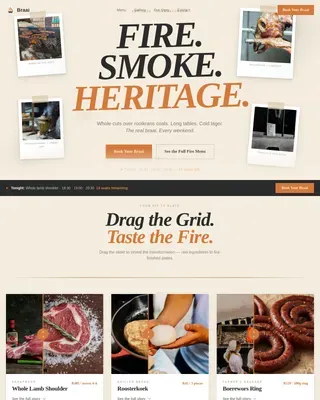
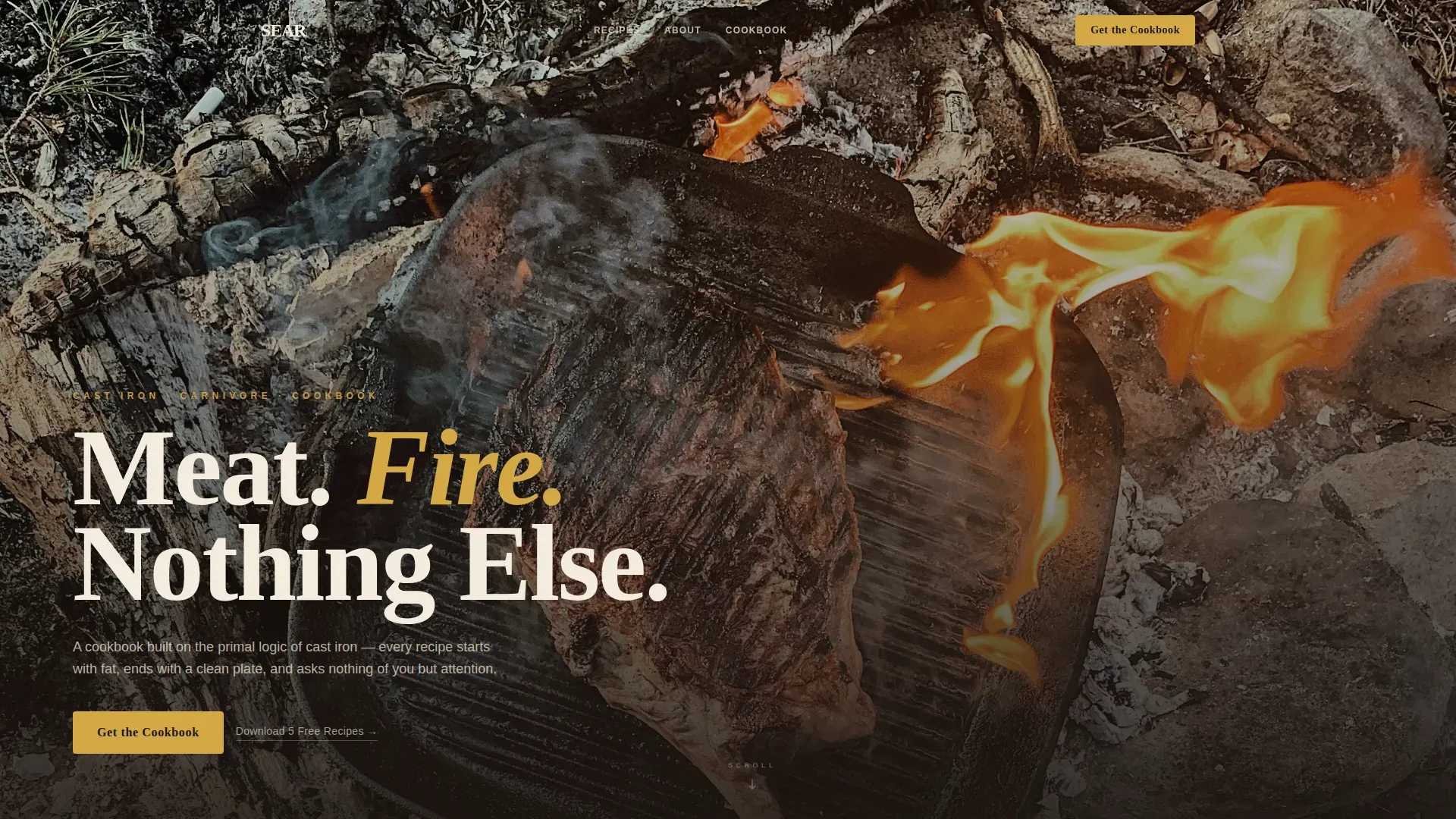
The header occupies the full viewport with a lifestyle overhead shot of a bone-in tomahawk steak in a cast-iron skillet. Herb butter melts across the sear marks. A hand holds a rosemary sprig at the frame edge. Steam rises under golden-hour kitchen light. The headline "Meat. Fire. Nothing Else." fades in over the lower third, set in a heavy serif typeface that looks hand-stamped on butcher paper. The primary "Get the Cookbook" call to action sits directly beneath it.
Hunger-First Recipe Category Grid
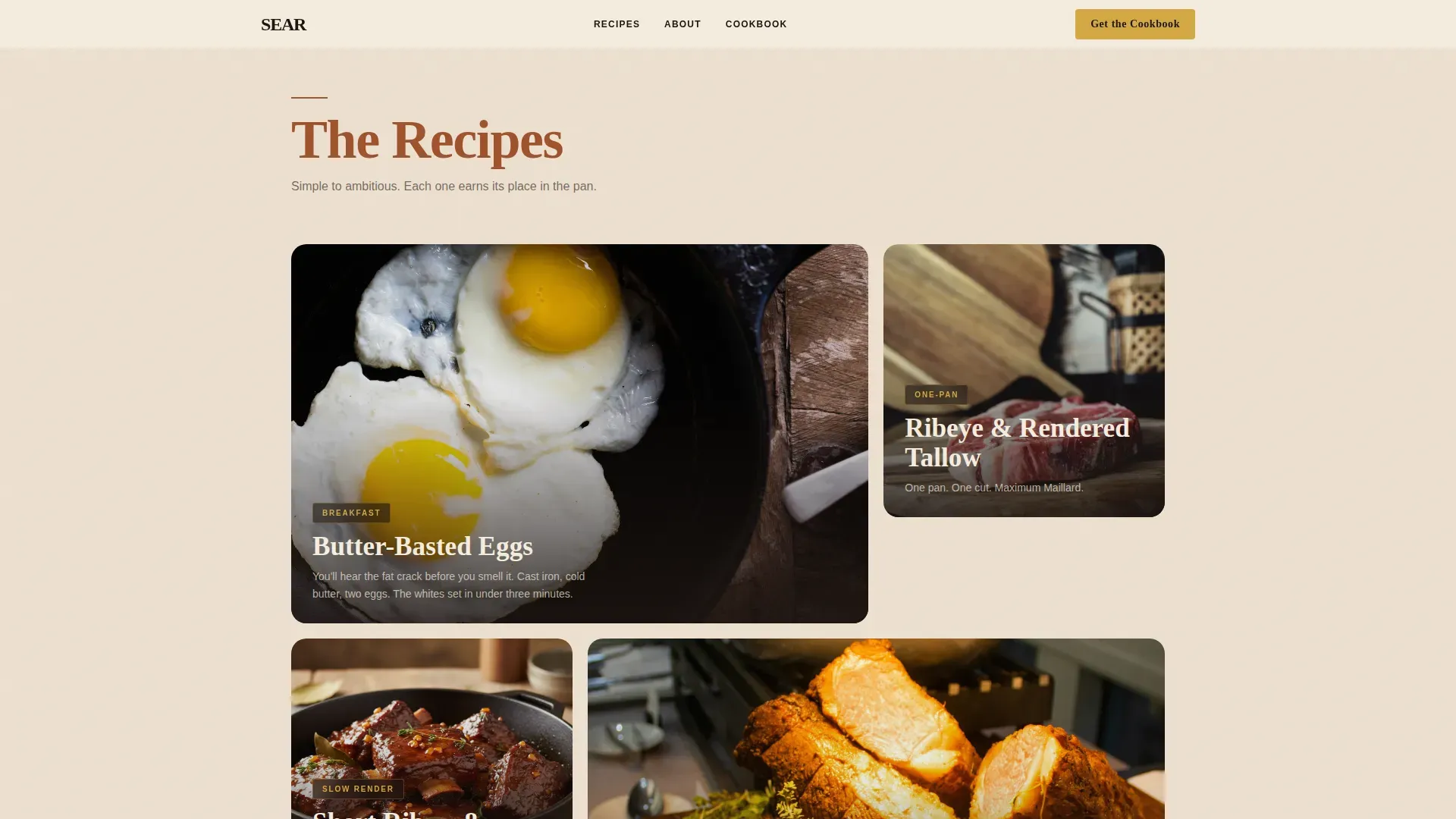
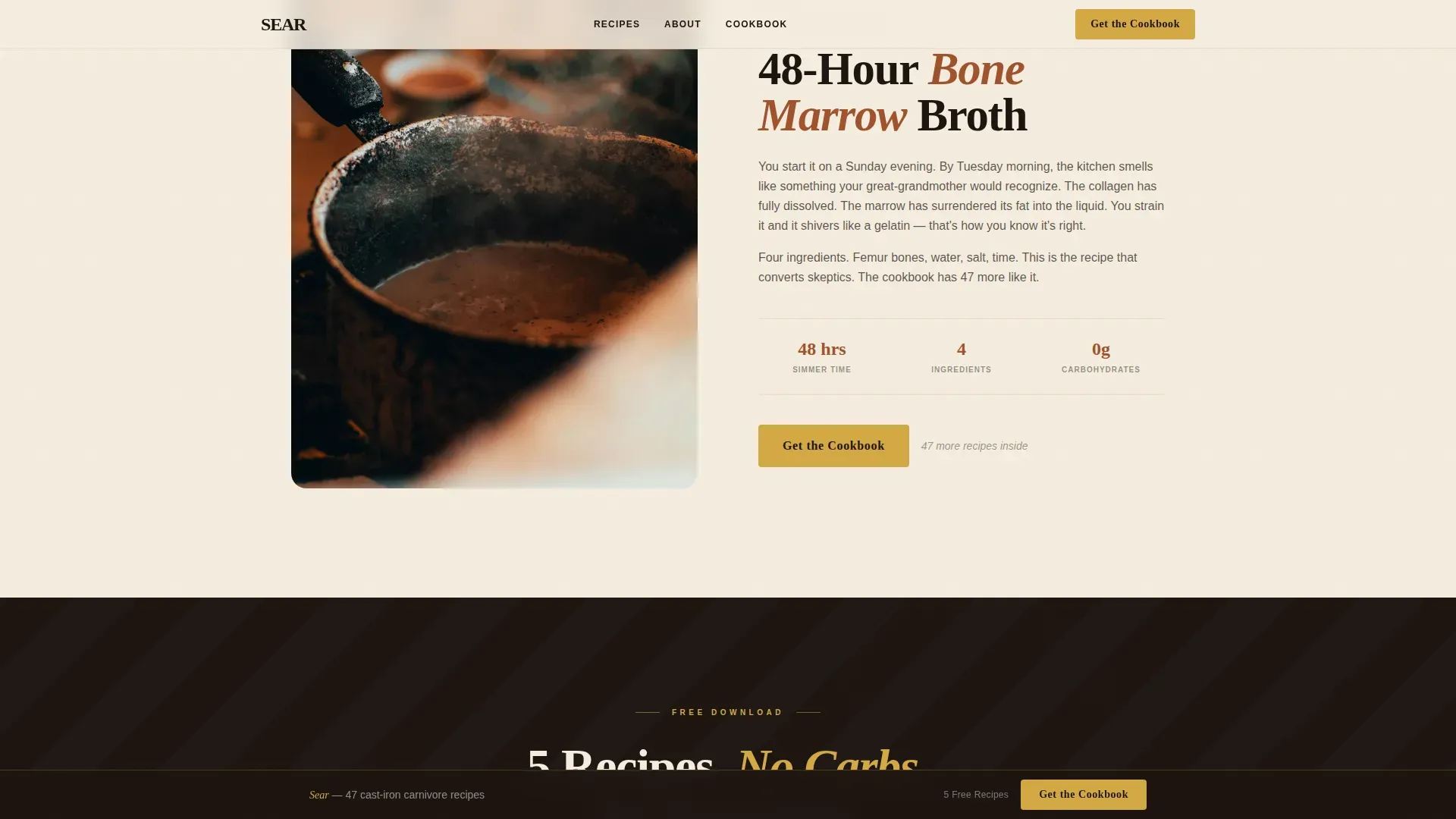
Four asymmetric bento-style sections introduce recipe categories in a deliberate sequence: Breakfast, One-Pan, Slow-Render, and Organ Meats. Each section leads with a single large hero photograph chosen for maximum texture and appetite appeal. Copy is written in second person so visitors cook alongside the page. The progression moves from simple (butter-basted egg) to ambitious (48-hour bone marrow broth), building momentum and desire with each scroll.
Sticky Cookbook Call to Action Bar
After the visitor passes the third scroll section, a subtle bottom bar appears and stays fixed on screen. It carries the "Get the Cookbook" button in rendered-fat gold. This persistent presence means the primary conversion point is always reachable without requiring the visitor to scroll back up. The bar is unobtrusive and does not cover recipe content.
Pull Quote Rust Band
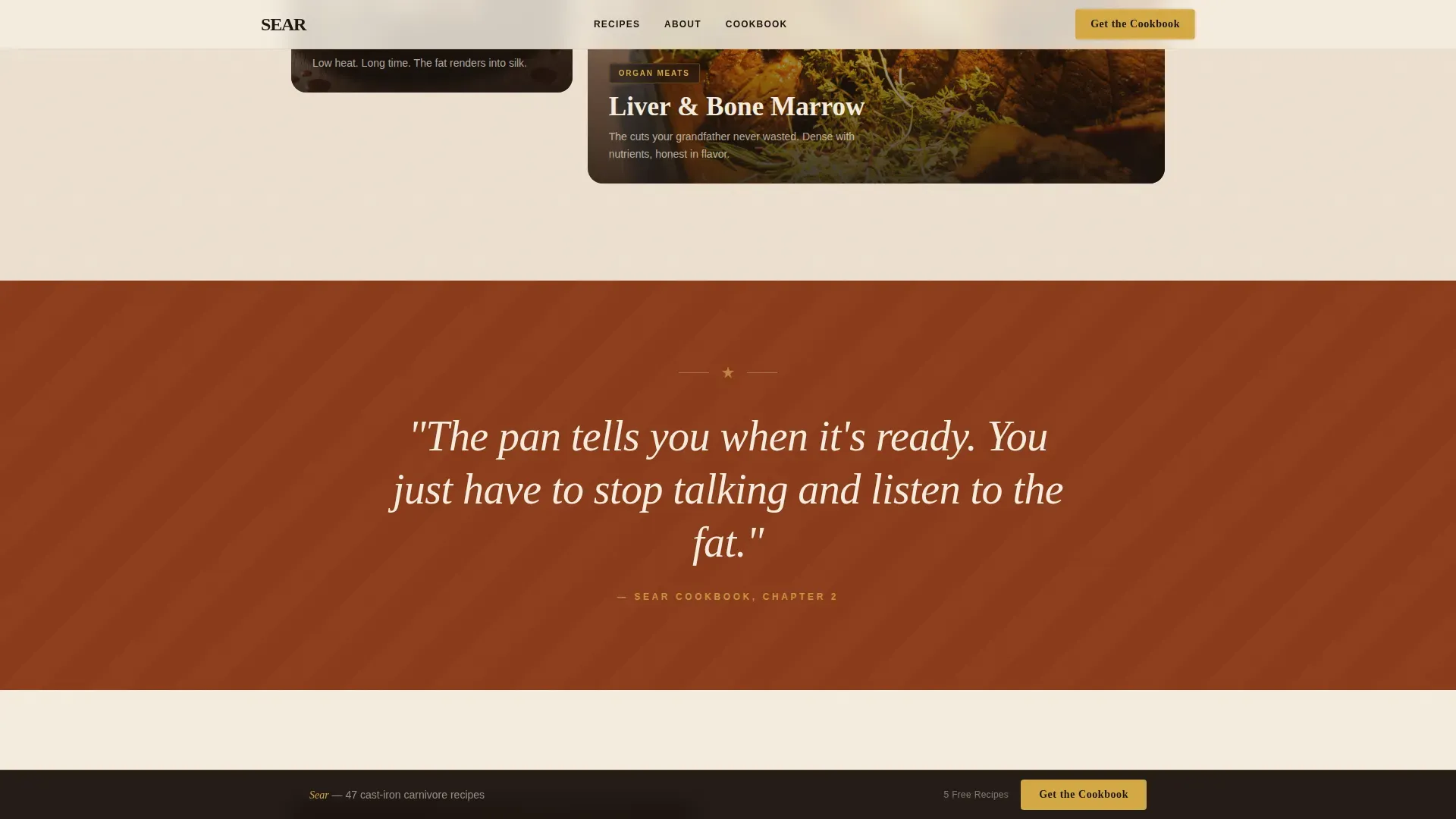
Between recipe sections, full-width rust-colored bands display pull quotes from the cookbook. The bands are styled like butcher-paper labels, wide and flat, with the quote set in the same heavy serif used for headlines. These breaks reinforce the cookbook's voice, serve as social proof, and give the eye a resting point between photography-heavy sections.
Minimal Email Capture Form
A dedicated section offers five free recipes in exchange for a first name and an email address. No multi-step form, no lengthy fields. The copy explains clearly what the visitor gets. This secondary conversion path runs parallel to the cookbook purchase path, so visitors who are not ready to buy still enter the funnel.
GSAP ScrollTrigger Animations
The template is built with high-animation fidelity using GSAP ScrollTrigger. Sections reveal with staggered entrances. Photography parallaxes gently as the visitor scrolls. The sticky call to action bar slides in with a clean GPU-accelerated transform. These motion decisions create a page that feels alive without distracting from the food.
Page sections overview
| Section | Purpose |
|---|---|
| Full-Viewport Hero | Cinematic steak shot with headline and primary call to action |
| Recipe Category: Breakfast | Butter-basted egg photography with sensory copy |
| Recipe Category: One-Pan | Cast-iron cooking method showcase |
| Recipe Category: Slow-Render | Long-cook beef and pork feature with broth intro |
| Recipe Category: Organ Meats | Nose-to-tail organ meat showcase |
| Pull Quote Band | Rust-colored cookbook excerpt strip |
| Featured Recipe Spotlight | Single hero recipe with secondary call to action |
| Free Recipe Capture | First name and email form for five free recipes |
| Minimal Footer | Horizontal flow footer with essential links |
Design & branding system
The visual identity follows a Warm Artisan direction with a Parchment and Rust color system. Every color choice has an honest, tactile reason behind it, the way a good butcher wraps their cuts in unbleached paper.
- Aged parchment cream (#F5EDDF) and smoked bone white (#EDE0D0) alternate as section backgrounds, with deep rust oxide (#A0522D) anchoring all headlines and charred iron black (#1C1410) handling body text
- Rendered-fat gold (#D4A844) is reserved exclusively for buttons and hover states, making every call to action visually distinct without resorting to loud contrast
- Typography pairs Fraunces, a heavy display serif for headlines, with DM Sans for body copy, creating a tension between hand-pressed warmth and clean readability
Mobile & speed optimization
The template is designed desktop-first but fully adapted for mobile. Late-night search behavior is a real pattern for this audience, someone who typed "can you really just eat steak" into a search bar after midnight deserves a fast, beautiful answer on whatever device they are using.
- All photography is set up for image optimization, with GPU-accelerated transforms keeping GSAP animations smooth on lower-power devices
- The single-column flow layout adapts cleanly to narrow screens without requiring a separate mobile design pass
- The sticky call to action bar and email capture form are both touch-friendly and visible without zooming
How this template helps you convert
A blog landing page for warm, artisan carnivore recipes should blend high-end culinary visuals with the simplicity of a meat-only diet. This template earns the click before it asks for it.
- The hero section leads with the strongest possible sensory hook: a cinematic steak shot, a visceral headline, and a gold call to action button, all above the fold, so visitors understand the offer in under three seconds
- The scrolling recipe section sequence builds appetite and desire progressively, so that by the time a visitor reaches the final call to action, they have mentally tasted six meals and already want the rest of the cookbook
- The dual-path conversion strategy, a direct cookbook purchase button and a low-friction email capture form, means every visitor has a natural next step regardless of where they are in their decision
Other information about this template
This template is the Sear Warm Artisan Carnivore Diet Recipe Blog Landing Page Template, built for creators who take meat seriously and want a landing page that matches that seriousness. Several topics are worth understanding before you build your content around it.
- The carnivore diet consists of animal foods only, including meat, fish, eggs, and some dairy. It eliminates all vegetables, fruits, nuts, seeds, grains, and processed foods, so your recipe content should reflect that scope clearly
- The Maillard reaction is one of the most important flavor-producing reactions in cooking. It creates the brown crust on cooked meat by rearranging amino acids and certain simple sugars at high temperatures, generating the aromas responsible for the characteristic smells of roasting, baking, and frying. Understanding this science helps you write copy that is factually grounded
- Removing moisture from the surface of meat before searing allows the Maillard reactions to proceed more efficiently. High temperatures speed up these reactions by accelerating the evaporation of water from the surface. Drying and browning the surface of food allows the reactions to occur even at temperatures below the boiling point of water
- Cooking meat at high temperatures can produce heterocyclic amines (HAs), chemicals that may cause changes in DNA and may increase cancer risk. The longer and hotter the meat is cooked, especially when it develops charred or burnt edges, the more HAs are likely to form. Temperatures above 180 degrees Celsius can lead to pyrolysis, which may create bitterness and carcinogenic compounds. It is advisable to avoid cooking meat at very high temperatures for extended periods
- Historical context adds depth to carnivore content. Neanderthals were skilled hunters who primarily consumed meat, especially during colder months when plant food was scarce. Isotopic analyses of Neanderthal bones indicate that their diet consisted largely of meat. They lived in Europe and parts of Asia approximately 400,000 to 40,000 years ago and used sophisticated tools for hunting and processing food. Neanderthals adapted their diets based on seasonal availability of food resources, and evidence of plant foods appears in dental plaque starch grains
- Selecting meats from pasture-raised or grass-fed sources is recommended for those following the carnivore diet. High-quality cuts free from additives and preservatives are the standard for artisan carnivore cooking. Nose-to-tail eating, emphasizing organ meats like liver, heart, and marrow, is prized by the carnivore community for its nutritional density
- Cooking methods that retain moisture, such as braising or slow cooking, can enhance the flavor and tenderness of meat. Pan frying and grill methods are also central to the carnivore cook's repertoire. Searing before sous vide can add depth to the flavor of the finished dish
- Bratwurst made from pork, beef, or veal, seasoned with salt and spices and stuffed into natural casings, can be included on the carnivore diet if made from clean ingredients without fillers or added sugars. Cooking methods should avoid sugary marinades or beer-based brines
- The template supports organizing your menu of recipes by protein type or cooking method, helping visitors find variety across beef, pork, lamb, chicken, and fish without diet fatigue
- The template's design strategy, dark rustic tones, editorial photography, and butcher-paper aesthetics, is built to exploit the sensory reactions that make food content convert
Theme
Warm Artisan
Creative direction
Sensory Appeal
Color system
Parchment & Rust
Style
Single Column Flow
Direction
Click-Through
Page Sections
Cinematic Full-viewport Hero
Hunger-first Recipe Category Sections
Sticky Cookbook Conversion Bar
Rust-band Pull Quote Strips
Low-friction Email Capture Form
GSAP Scrolltrigger Animation System
Related questions
Who is this landing page template designed for?
Can I use this template to capture email leads as well as sell a cookbook?
What recipe categories does the template include sections for?
Does the template support explaining the science of searing in its copy structure?
Is this template suitable for beginners building their first carnivore diet blog?