Visionary Architectural Design Landing Page Template
Atrium is a storybook landing page template built for cultural center architecture practices. It combines a manifesto-driven scroll structure, an animated isometric campus illustration, and a deep obsidian-and-gold visual identity to position your practice as the definitive design voice for civic arts buildings. A built-in lead form drives downloads of your Cultural Space Playbook PDF.
by Rocket studio
Quick summary
Atrium is a single-page architecture landing page template designed for practices that create libraries, performing arts centers, and museums. It follows a manifesto-driven editorial structure, where each scroll section delivers a conviction statement backed by project evidence. The page culminates in a role-first lead form that drives Playbook PDF downloads and case study access.
Who this template is for
This template serves architecture practices that work in the civic and cultural sector. It speaks directly to the clients those practices need to win, and it positions the firm's philosophy before credentials.
- Municipal arts council directors and cultural foundation leaders reviewing proposals
- University chancellors planning a new student commons or performing arts center
- Architects, urban planners, and educators researching civic design practices and resources
What problem this template solves
Architecture practices that design civic arts buildings often struggle to communicate philosophy online. A portfolio grid alone does not explain why the atrium of a building matters more than its facade. Institutional clients need to understand a firm's worldview before they schedule a conversation.
- Generic portfolio sites fail to differentiate practices with a strong design philosophy
- Municipal and university clients need evidence of expertise before engaging services
- Lead generation for high-value civic projects requires more than a contact form
What you get with this template
Atrium delivers a complete storybook landing page structure ready to adapt to your practice's projects, voice, and visual assets. Every section follows a deliberate rhythm: statement, evidence, breath.
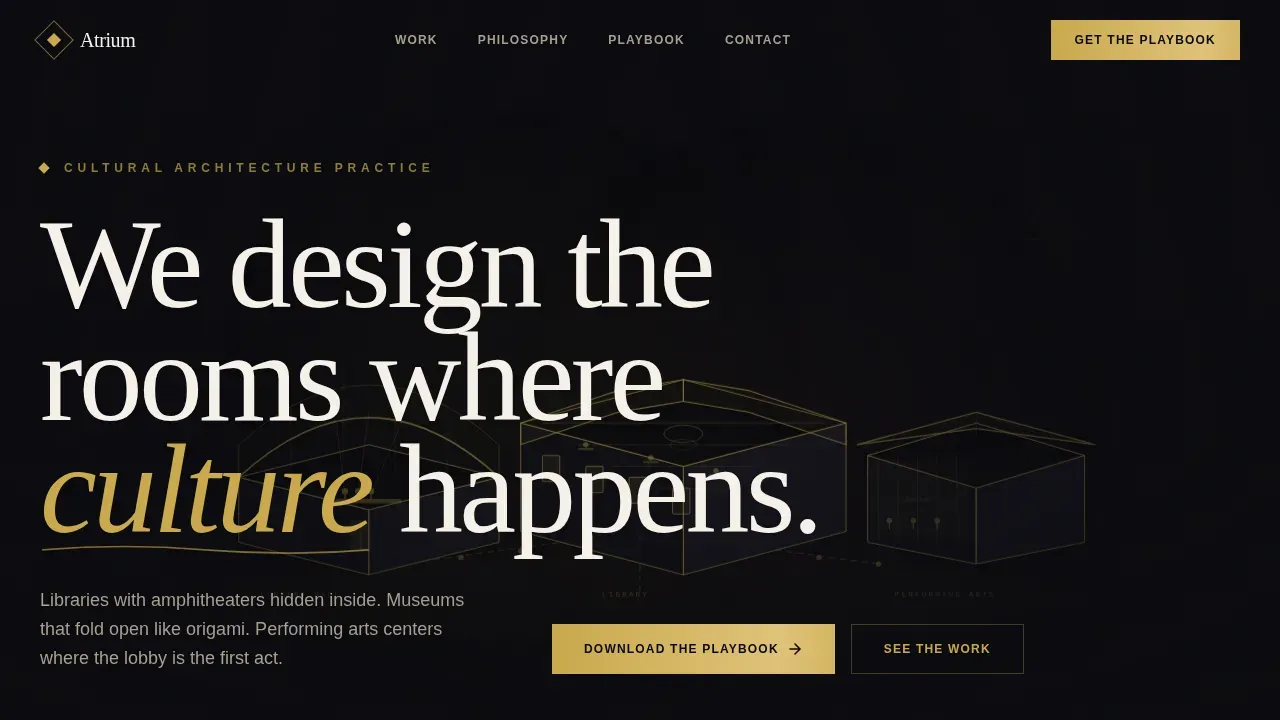
- Animated hero section with isometric SVG campus illustration and manifesto headline
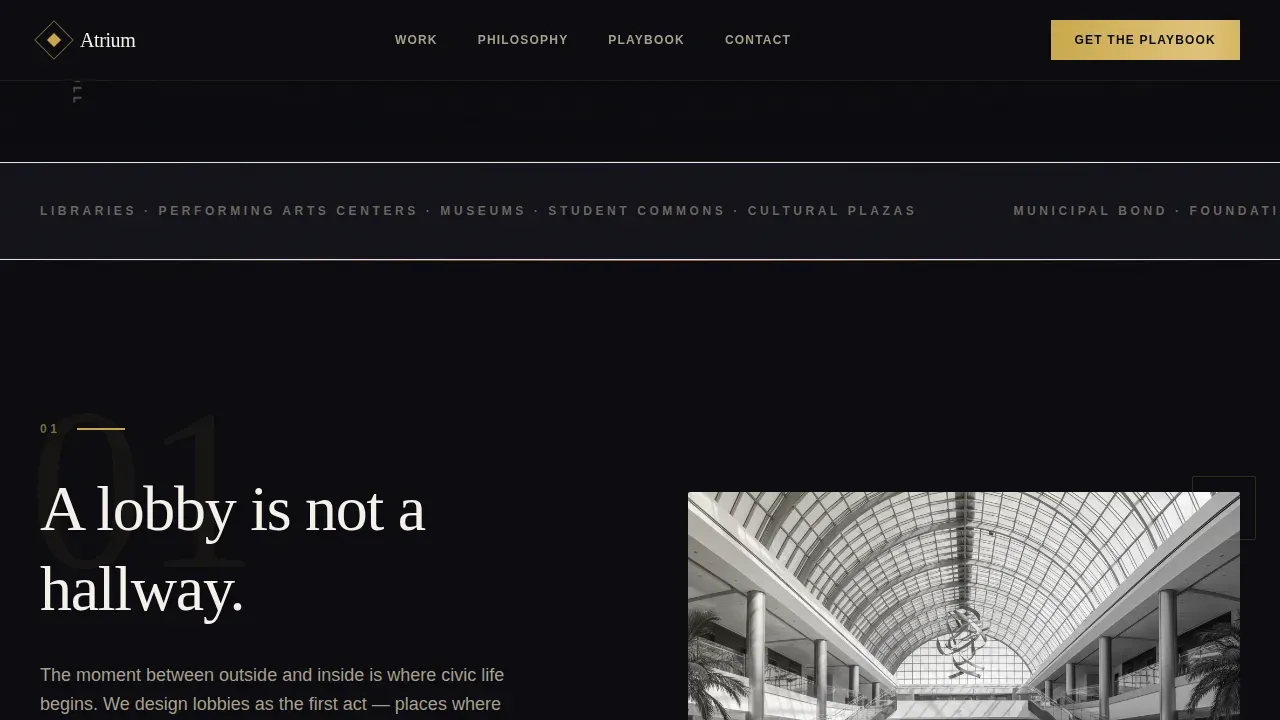
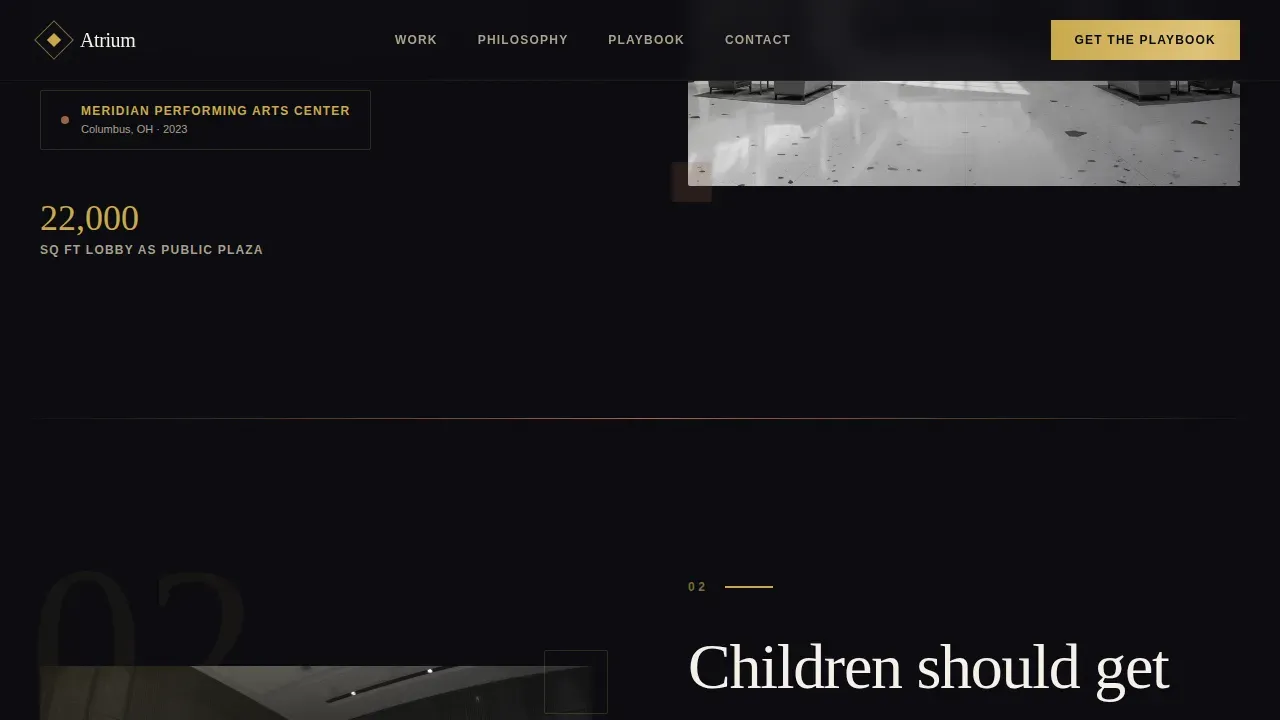
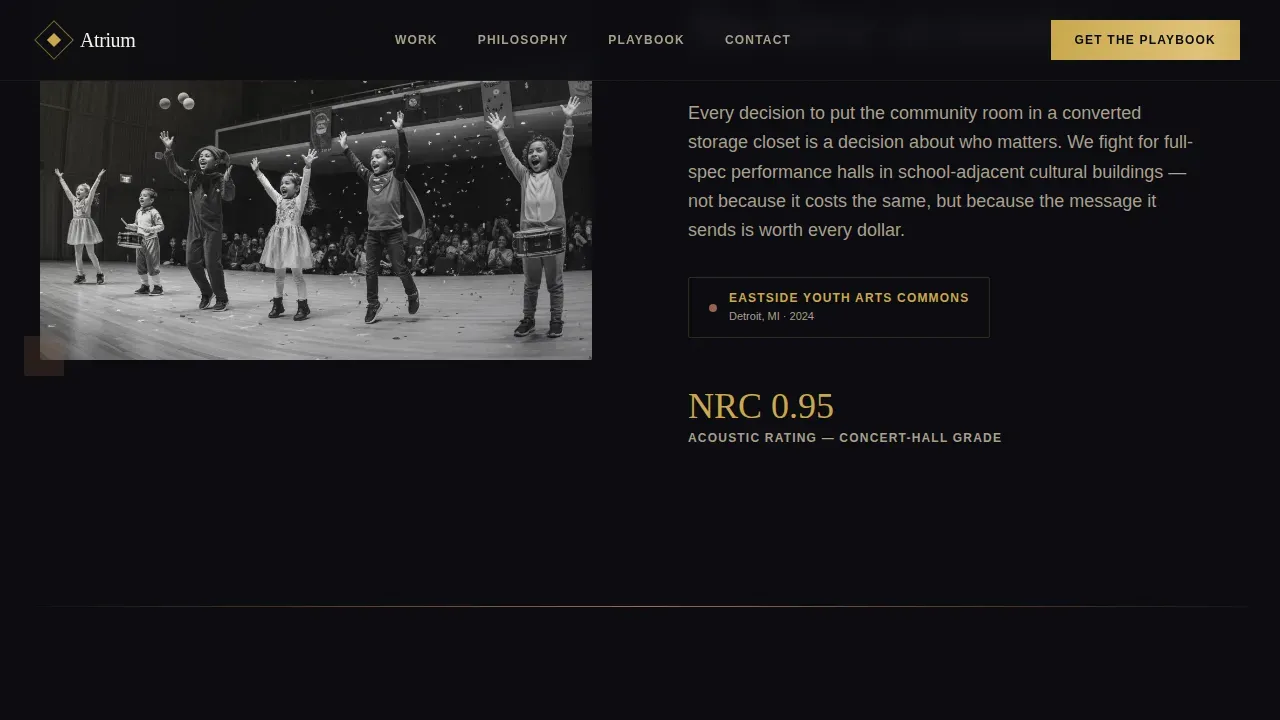
- Manifesto scroll with conviction statements paired to portfolio proof panels
- Role-first lead capture form tied to a Playbook PDF download and case study library
Feature list
Atrium is built around six core design and conversion features. Each one reflects a considered approach to how institutional clients explore, evaluate, and engage with an architecture practice online.
Animated Isometric Hero Illustration
The header features a sprawling isometric campus drawing rendered in gold linework on an obsidian background. On page load, rooflines rise, doors swing open, and light beams fan out across the illustration. The manifesto headline then lands in oversized serif text, giving visitors an immediate sense of scale and design conviction.
Manifesto Scroll Architecture
The page is structured as a declaration of belief. Each full-page section presents a single conviction in large display text, paired with a project that proves it. This stage-by-stage rhythm helps visitors understand the practice's values through evidence, not claims.
Portfolio Bento Grid
An asymmetric bento grid displays five architecture projects with hover states that reveal key details. Visitors can filter projects by building type, making it straightforward to find relevant work. Each project panel shows building type, scale, and a visual that rewards attention.
Role-First Lead Capture Form
The Playbook download form opens with a role selector: architect, municipal leader, foundation director, or educator. It then asks for an email and an optional field inviting the visitor to describe what kind of space their community is missing. This approach segments leads and creates a genuine value exchange.
Horizontal Testimonial Scroll
A horizontally scrolling testimonials section displays quotes from institutional clients, including municipal officials and university chancellors. Testimonials from users and partners enhance the perceived impact of the work and help new visitors analyse the practice's track record quickly.
Scroll-Linked Geometric Illustrations
Geometric illustrations thread between manifesto sections. As visitors scroll, abstract tessellations transform into recognizable building forms. This narrative-driven design approach rewards attention and reinforces the practice's commitment to architecture as a storytelling medium.
Page sections overview
| Section | Purpose |
|---|---|
| Hero Illustration | Introduces the practice with animated isometric campus art and manifesto headline |
| Manifesto Statements | Presents three conviction statements paired with project proof panels |
| Portfolio Bento Grid | Displays five projects in a filterable asymmetric grid with hover states |
| Testimonials Scroll | Horizontal scroll of institutional client quotes and project metrics |
| Playbook Form | Role-first lead form driving Playbook PDF download and case study access |
| Footer | Linear single-row footer with practice navigation |
Design & branding system
The Atrium template uses a Playful Geometric visual identity built on an Obsidian and Gold color system. Every design decision is defined to feel like a contemporary arts museum during an evening gala: dark walls making gilded type glow, warm spotlights pooling on open spaces.
- Obsidian black (#0B0B0F) as the dominant background, burnished gold (#C9A84C) on headlines and interactive accents, gallery white (#F5F0E8) for text panels
- Muted terracotta (#A0674B) applied to dividers and hover states across the page
- DM Serif Display for manifesto headlines and large text; Manrope for body copy and user interface elements
Mobile & speed optimization
The template is desktop-first by design. Institutional clients reviewing proposals during board presentations or procurement research expect a large-screen experience. The layout is structured to display the isometric illustration and bento grid at full fidelity on wide screens.
- Static content is served as server components; animations run as client components to keep page weight manageable
- High-resolution atrium imagery is structured to maintain verticality, light, and materiality without slowing the site
- The role-selector form and horizontal scroll sections adapt for smaller device sizes
How this template helps you convert
Atrium is built around a content-led conversion model. The primary goal is earning a download, not forcing a click.
- The manifesto scroll builds trust section by section, so visitors who reach the Playbook form are already aligned with the practice's worldview and more likely to share their email and role.
- The secondary conversion path offers access to a curated case study library filtered by building type and budget scale, giving visitors a second reason to engage without requiring a separate page visit.
Other information about this template
Atrium is a Webflow template, making it ideal for architecture and interior design studios that want a published, production-ready website without extensive coding knowledge. The template is designed for creative professionals who want to present their work sublimely, and it can be customized to match your practice's projects, typography, and assets.
The template's design approach aligns with broader practices in manifesto-driven architecture, where the atrium serves as a symbolic and social center of a building. Atriums are defined in cultural architecture as spaces that connect varied programmatic elements, encourage encounters between artists, visitors, and researchers, and reflect the cultural identity of the community they serve.
From a digital research perspective, the template's content model is informed by how institutions understand and share knowledge. Platforms in the arts and humanities world, including discovery portals that pool resources for research communities, use structured content to help users navigate topics across geography and discipline. The Atrium template brings a similar clarity of information architecture to a practice's landing page, helping visitors follow the practice's work through a series of curated views.
- The template supports multiple languages through Webflow's localization features, making it usable across a number of regional contexts
- Sharing the Playbook PDF through the lead form creates a resource that helps prospects analyse the practice's expertise before a first meeting
- The case study library helps visitors explore projects classified by building type and budget, protecting their time and delivering immediate value
- Published instantly on Webflow's hosting infrastructure, the site is live and accessible from the moment you connect your domain
- AI-powered tools can streamline further customization of the template, helping teams create production-ready adjustments by automating code generation where required
Theme
Playful Geometric
Creative direction
Manifesto
Color system
Obsidian & Gold
Style
Storybook/Full-Page
Direction
Content/Resource
Page Sections
Animated Isometric Campus Hero
Manifesto-driven Scroll Structure
Filterable Portfolio Bento Grid
Role-first Playbook Lead Form
Horizontal Testimonials Section
Scroll-linked Geometric Reveals
Related questions
What kind of architecture practice is Atrium built for?
How does the lead capture form work?
Can I customize the manifesto statements and project panels?
Is this template suitable for a practice with international projects?
Does the animated hero require custom development?