Memory Care Consulting Landing Page Template
Clarity is an editorial-style memory care consulting landing page built for practices that guide families through dementia diagnoses. It follows a day-in-the-life scroll, pairs large photography with short narrative text, and drives leads through a primary family assessment booking form and a secondary free downloadable guide for families who need something to hold onto tonight.
by Rocket studio
Quick summary
Clarity is a single-page editorial template built for memory care consultants. It translates a complex, emotional service into a warm and readable narrative scroll. A primary call to action books a family assessment. A secondary path offers a free downloadable guide. The design uses clean Arctic White tones and a single cornflower accent to hold trust without visual noise.
Who this template is for
This template is designed for memory care consulting practices that serve families navigating dementia care decisions. It works equally well for solo consultants and small teams.
- Adult family caregivers managing a parent's care from a distance who need a trusted professional resource
- Facility directors and care staff looking to audit or improve their dementia support protocols
- Memory care consultants who want a polished, lead-generating page that communicates warmth and credibility
What problem this template solves
Families facing a dementia diagnosis often land on clinical, impersonal pages that overwhelm rather than guide. Memory care consultants need a page that earns trust fast and gives visitors a clear next step before they click away.
- Visitors cannot picture what consulting actually looks like, so they hesitate to book
- Early-stage families feel unready to call but still need a resource they can act on tonight
- Generic care pages fail to distinguish a personal consulting practice from a facility directory
What you get with this template
You get a fully designed editorial landing page that carries visitors through a structured day-in-the-life story. Every section is ready to be populated with your photography and copy.
- A magazine-style scroll with paired editorial photography and short narrative text panels
- A primary lead capture form asking for name, relationship, living situation, and preferred callback window
- A secondary email-gated download path offering a free PDF guide for earlier-stage families
Feature list
This template includes purpose-built components that turn an emotional subject into a confident, conversion-ready page.
Editorial Day-in-the-Life Scroll
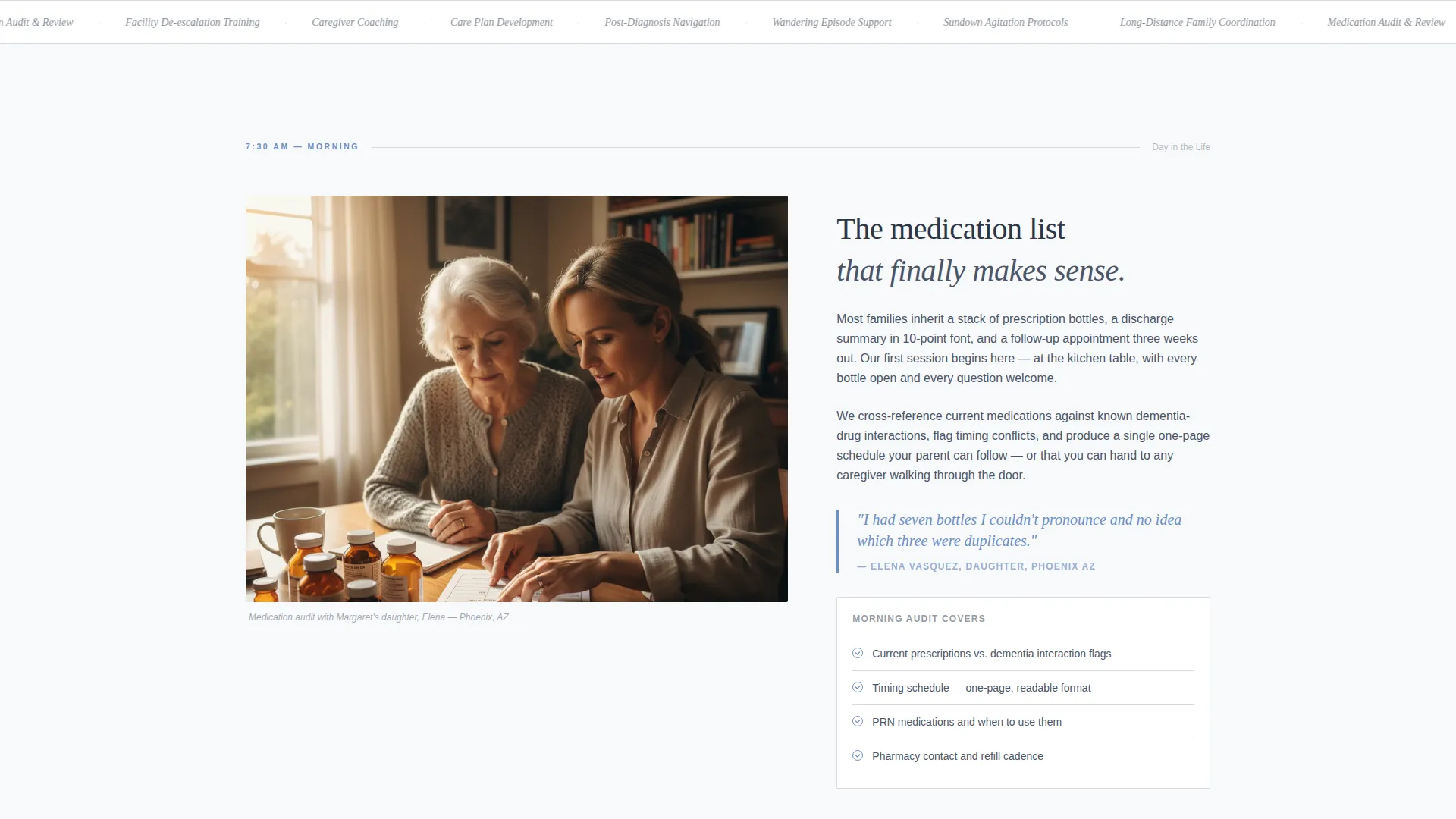
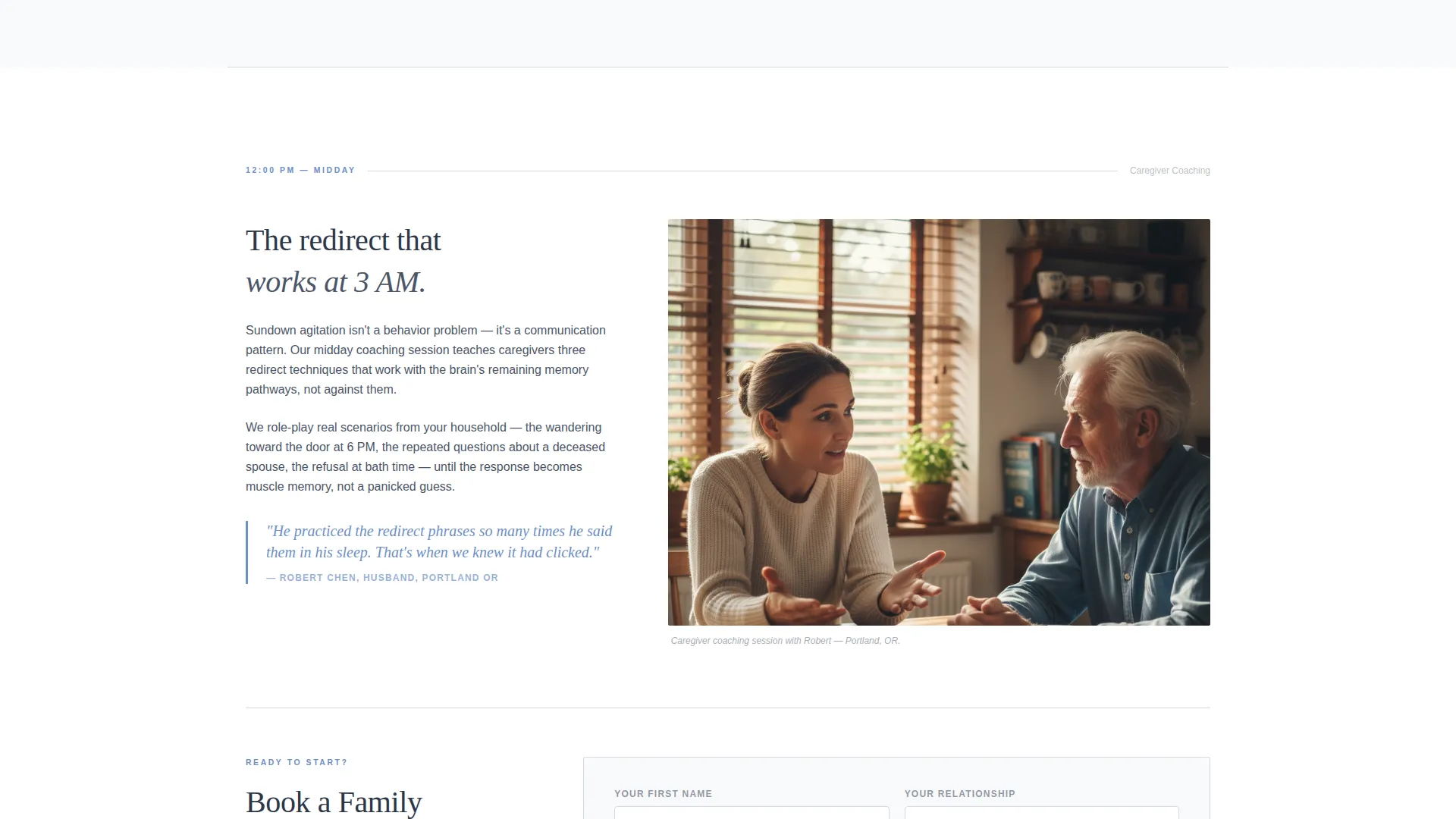
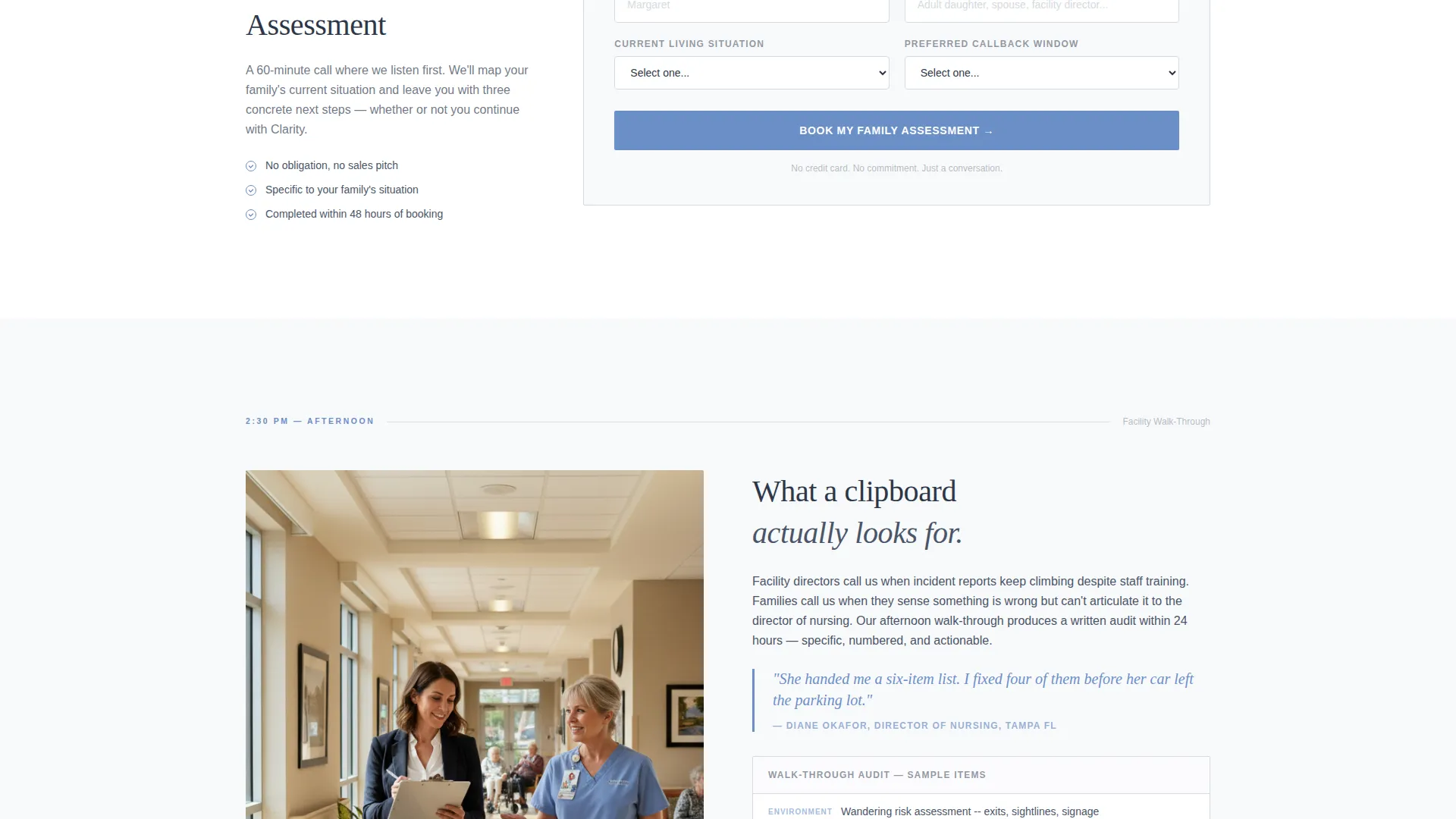
The page follows a single composite family through a twenty-four-hour consulting cycle. Morning medication audit, midday coaching session, afternoon facility walk-through, and evening phone debrief each get their own magazine-style spread. This rhythm makes consulting tangible and removes the abstraction that typically causes hesitation.
Pull-Quote Callouts in Cornflower
Strategically placed pull-quotes appear in the template's cornflower accent color throughout the narrative sections. They punctuate the scroll, slow the reader down at key emotional moments, and reinforce the consultant's voice before the call to action appears.
Primary Family Assessment Form
The first call-to-action form appears after the midday section and anchors the footer. It collects the family member's first name, their relationship to the person with dementia, current living situation via a dropdown, and a preferred callback window. This keeps the intake process human and low-friction.
Free Guide Download Path
A secondary conversion path captures earlier-stage visitors who are not ready to call. An email field gates the downloadable PDF titled "The First 72 Hours After Diagnosis." This path meets families where they are emotionally and keeps them connected to the practice.
Cinematic Header with Fade-In Headline
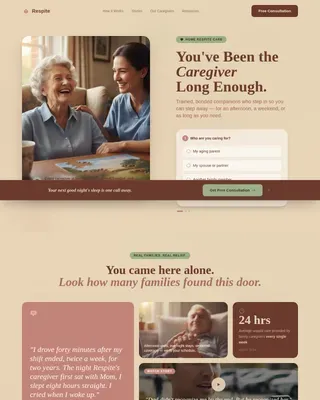
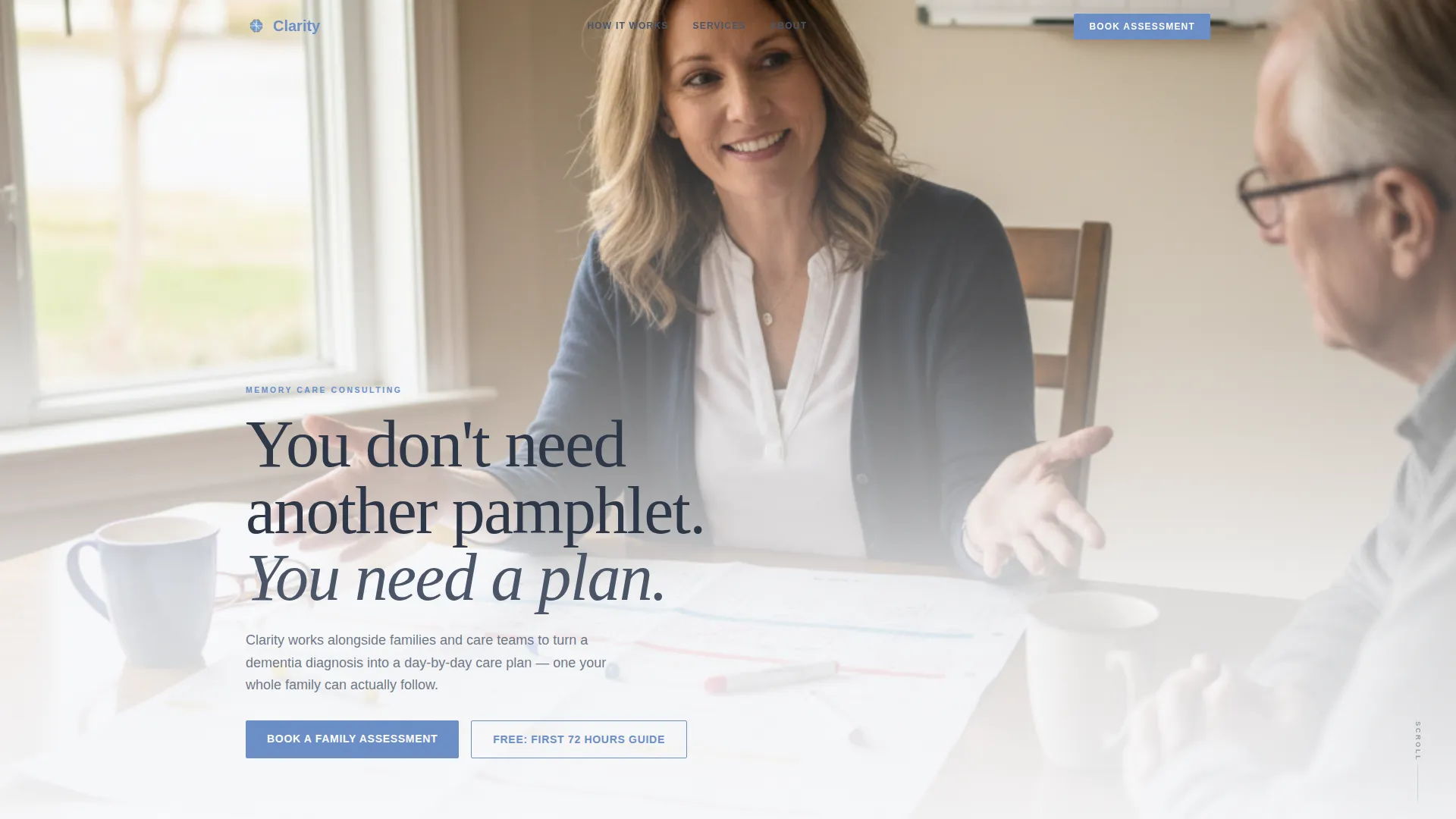
The header uses a team photo captured at a family's dining table with natural window light. A translucent white wash at the bottom third carries the headline: "You don't need another pamphlet. You need a plan." The headline fades in on load, giving the page an immediate editorial quality.
Dual Call-to-Action Structure
The template places the primary booking call to action at two deliberate points: once mid-scroll after the midday section and again anchoring the footer. This dual placement catches visitors at different stages of readiness without feeling repetitive.
Page sections overview
| Section | Purpose |
|---|---|
| Header with headline | Opens with team photo and fades in the practice's core promise |
| Morning care audit | Shows the consulting day beginning with a medication review scene |
| Midday coaching session | Depicts a caregiver coaching moment with editorial photography and narrative text |
| Primary booking form | Captures leads with the family assessment form after the midday section |
| Afternoon facility walk | Illustrates a facility walk-through using a checklist clipboard scene |
| Evening phone debrief | Closes the day-in-the-life arc with an evening callback scene |
| Free guide download | Offers the gated PDF for earlier-stage families via email capture |
| Footer call to action | Repeats the booking call to action to catch late-scroll decision makers |
Design & branding system
The template uses an Arctic White color system built for clinical trust and emotional warmth. Every design decision prioritizes readability and calm over visual complexity.
- Arctic White backgrounds (open snow white #F8F9FB and soft birch gray #D6DAE0) keep surfaces clean and let photography carry emotional weight
- Steady slate (#4A5568) anchors all body text with high readability and a composed, librarian-level tone
- Quiet cornflower (#6B8EC7) appears sparingly on links, pull-quotes, and call-to-action borders as a reassuring accent without visual noise
Mobile & speed optimization
The editorial layout is structured to translate cleanly from desktop to mobile without losing the narrative rhythm or the impact of the photography pairings.
- Full-width photography panels reflow gracefully so the day-in-the-life story remains legible on smaller screens
- Form fields and dropdown elements are sized for comfortable thumb interaction on mobile devices
- The dual call-to-action placement ensures the booking form is reachable at a natural scroll point on any screen size
How this template helps you convert
This template is built around the emotional and practical reality of a family in caregiving crisis. Every layout decision serves conversion by reducing friction and building trust progressively.
- The day-in-the-life scroll dissolves the abstraction of consulting by showing real scenes, which lowers hesitation before the booking form appears
- The dual call-to-action structure catches visitors at different levels of readiness, whether they are ready to book or just need the free guide first
Other information about this template
Clarity sits at the intersection of editorial design and compassionate lead generation. It is purpose-built for the memory care consulting niche within the broader elderly care and senior living category.
- The template style is Editorial/Magazine, making it distinct from typical clinical or directory-style care pages
- The creative direction is Day-in-the-Life, a storytelling format that builds familiarity and trust through recognizable domestic and clinical scenes
- The theme follows an Educational Guide structure, so the scroll teaches visitors what memory care consulting involves before asking them to act
- The header concept is a Team Photo in a naturalistic setting, reinforcing authenticity and approachability from the first frame
Theme
Educational Guide
Creative direction
Day-in-the-Life
Color system
Arctic White
Style
Editorial/Magazine
Direction
Lead Generation
Page Sections
Editorial Day-in-the-life Scroll
Cinematic Header with Fade-in Headline
Pull-quote Callouts
Primary Family Assessment Form
Free Guide Download Path
Dual Call-to-action Placement
Related questions
Who is this landing page template designed for?
What conversion paths does this template include?
Can I adapt the day-in-the-life sections to reflect my own consulting process?
What does the family assessment form collect?
Is this template suitable for practices that serve remote family caregivers?